Why Local SEO in the USA Matters More Than Ever in 2026
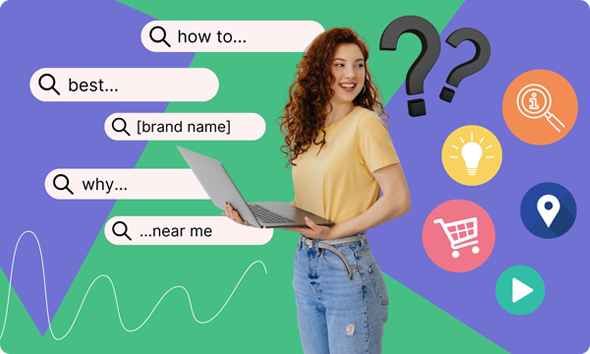
A local customer rarely begins with a company name. They begin with a need: a dentist near their office, an emergency plumber open now, a roofing contractor in a particular suburb, or a web designer who understands businesses in their city. Local SEO is the work of making sure your business can be found, understood and trusted at that moment.
For small and mid-sized companies across the United States, local visibility has become more competitive because search results now bring together maps, business profiles, reviews, websites, directories and AI-generated search experiences. A complete Google Business Profile may help a business appear for nearby searches, but the profile works best when the website, contact details, service information and reputation all support the same story.
This guide explains how local SEO USA campaigns work in 2026, which signals deserve the most attention and how smaller businesses can compete without copying national brands or publishing dozens of weak location pages. It also separates proven fundamentals from the shortcuts that create temporary gains, policy problems or wasted marketing spend.
The goal is not to “trick” Google into showing a business everywhere. The goal is to give searchers and search systems accurate evidence that the company is relevant to the service, operates in the stated area and has earned a credible local presence.
What Is Local SEO?
Local search engine optimization is the process of improving a business’s visibility for searches connected to a geographic area. These searches may include a city, neighborhood or state, but they can also be implicit. Someone searching for “coffee shop,” “personal injury lawyer” or “HVAC repair” from a phone often expects nearby results even when no location is typed.
A complete local SEO strategy usually includes four connected areas:
- Google Business Profile management: accurate categories, services, hours, address or service-area settings, photos and contact information.
- Website optimization: clear service pages, locally relevant content, crawlable navigation, useful title tags, internal links and mobile-friendly design.
- Reputation and citations: genuine customer reviews and consistent business information across trusted directories and local sources.
- Authority and measurement: relevant backlinks, community mentions, Search Console analysis, conversion tracking and ongoing improvements.
Google explains that local results are mainly influenced by relevance, distance and prominence. Relevance is the match between the business and the search. Distance is the relationship between the business and the searcher or named location. Prominence reflects how well known and well supported the business appears online and offline.
That framework is important because local rankings cannot be solved by keyword repetition alone. A business can improve relevance and prominence, but it cannot legitimately pretend to be physically closer to a searcher than it is.
What Businesses Should Prioritize in a Local SEO USA Strategy
A strong local SEO strategy is not built around one ranking factor or one platform. Businesses that want sustainable visibility in the United States need several signals to work together: an accurate Google Business Profile, useful website content, genuine reviews, consistent business information and clear evidence that they actually serve the locations they target.
For most small and mid-sized businesses, the highest-priority areas are:
- Google Business Profile: keep categories, services, hours, contact details, photos and service-area information accurate and current.
- Service and location pages: create useful pages for the services and geographic markets the business genuinely serves.
- Reviews and reputation: build a consistent process for requesting honest customer feedback and responding professionally.
- Local citations: maintain accurate business information across trusted directories, industry platforms and local organizations.
- Website quality: make important pages fast, mobile-friendly, crawlable and easy for visitors to understand.
- Local authority: earn relevant mentions, links, partnerships and community visibility instead of relying on low-quality directory submissions.
- Conversion tracking: measure calls, forms, bookings and qualified enquiries rather than evaluating success only through rankings.
The objective is not to repeat the phrase local SEO USA throughout every page. It is to make the business easier for customers and search systems to understand: what it offers, where it operates, why it is trustworthy and how someone can take the next step.
That combination creates a stronger foundation than chasing individual tactics in isolation. Google Business Profile optimization can improve local discovery, but it works best when the website, reviews, business information and local reputation all support the same message.
The Three Foundations of Local Search Visibility
Relevance: Make the Business Easy to Understand
Relevance improves when a profile and website explain the business precisely. A roofing company should identify the roofing services it actually provides. A law firm should separate practice areas clearly. A medical clinic should use accurate categories and service descriptions rather than vague language such as “complete solutions.”
On the website, relevance comes from focused service pages, descriptive headings, useful local information and internal links that show how services relate to one another. Our SEO-friendly website design services address this foundation during site planning so important pages are not hidden inside a visually attractive but confusing structure.
Distance: Respect the Geography of the Search
Distance is not something a marketing agency can manufacture. A business should use its genuine address or accurate service-area settings and avoid virtual offices, borrowed addresses or duplicate profiles created only to appear in additional cities.
For service-area businesses, location pages can explain where the company works, but those pages should reflect genuine service coverage. A page for a city the business does not actually serve creates a poor customer experience and weakens trust.
Prominence: Build Evidence of a Real, Trusted Business
Prominence grows through genuine reviews, links from relevant websites, local press, association memberships, community involvement, consistent listings and a useful website. Google notes that reviews and links can contribute to local prominence.
This is why a smaller business can sometimes outrank a large competitor locally. A national company may have more authority overall, while the smaller business may have stronger neighborhood relevance, more current reviews and better local relationships.
Google Business Profile Optimization for Local SEO in the USA
A Google Business Profile is often the first complete view a customer sees. It can display hours, directions, phone numbers, services, photos, reviews and links before the visitor reaches the website. That makes profile accuracy a conversion issue as well as a visibility issue.
Verify and Protect Ownership
Only owners and authorized representatives should manage the profile. Keep access limited to trusted users, remove former employees and use strong account security. An unverified or poorly controlled profile is difficult to manage and vulnerable to unwanted changes.
Use the Real Business Name
The profile name should match the name used in the real world on the website, signage, documents and customer communication. Adding extra city names or keywords to the business name can violate Google’s guidelines and create suspension risk.
Select Accurate Categories
The primary category should describe the main business, while secondary categories can cover genuine additional services. More categories are not automatically better. Google recommends using the fewest categories needed to describe the core business.
Complete the Main Information
Review the phone number, website, hours, appointment links, services and description. Seasonal hours and holiday hours should be updated before customers encounter incorrect information.
Use the Correct Address or Service Area
Businesses that receive customers at a staffed location can display an eligible address. Service-area businesses that travel to customers should configure the service area accurately and hide the address when customers are not served there. Online-only businesses and lead-generation businesses are generally not eligible for a Business Profile.
Add Useful, Genuine Photos
Use clear images of the actual location, team, vehicles, products or completed work. Stock photos may fill space, but real images provide stronger proof and help customers know what to expect.
Keep the Profile Active Without Inventing Activity
Updates, offers and posts can communicate current information to customers, but they should not be described as a guaranteed ranking tactic. Their main value is keeping the profile useful and current.
For businesses that need ongoing support across profiles, website pages and technical optimization, our local SEO services for US businesses can be structured around the markets, locations and services that matter most. For broader organic search growth beyond local visibility, our SEO services can support the wider strategy.
Google Maps, the Local Pack and Organic Search Results
Local SEO can create visibility in several parts of Google Search, and these results should not be treated as identical. A business may appear prominently in Google Maps while ranking differently in the traditional organic results below it.
The Google Local Pack
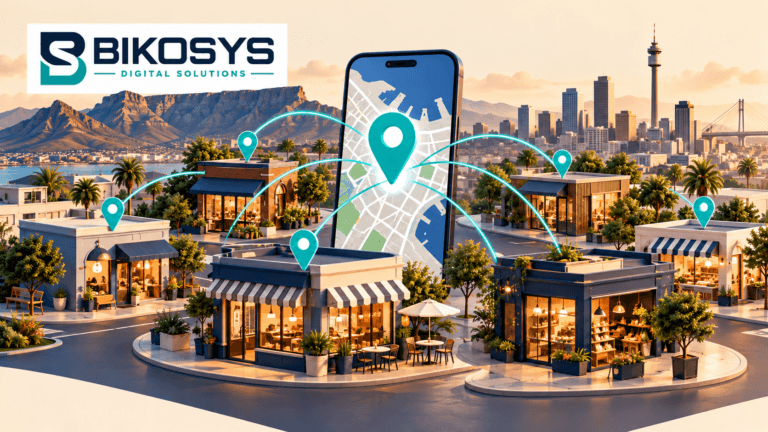
For many location-sensitive searches, Google displays a group of nearby businesses alongside a map. This is commonly called the Local Pack or Map Pack. The results may include business names, ratings, reviews, opening hours, directions and other information from Google Business Profiles.
Visibility in the Local Pack is strongly connected to local relevance, distance and prominence. This is why an accurate Business Profile, genuine reviews, correct categories and consistent business information matter so much for local searches.
Google Maps Results
Google Maps provides a broader local discovery environment where customers can compare businesses, view locations, read reviews, check opening hours and request directions. Businesses should keep their profile information accurate because customers may interact with the profile without visiting the website first.
Localized Organic Results
Traditional organic search results can also change according to location. Service pages, location pages, local guides and other relevant website content may rank beneath or alongside map-based results.
This means local SEO should not focus exclusively on Google Business Profile. The website still needs strong service information, useful local content, internal links, technical SEO and authority signals.
Why Both Areas Matter
A customer might discover a business in the Local Pack, visit its website to evaluate the service and then submit a form or make a phone call. Another customer may first discover a service page through organic search and then check the Business Profile for reviews and directions.
The strongest local presence therefore connects both experiences: an accurate Business Profile and a trustworthy website that reinforce the same services, locations and business information.
Reviews: Build Trust Without Breaking Policy
Reviews influence customer decisions and may also support local prominence. The strongest review program is not a one-time campaign designed to collect a sudden burst of five-star ratings. It is a simple, repeatable process that asks real customers for honest feedback at an appropriate moment.
Create a Consistent Request Process
Ask after the service has been delivered and the customer has had time to evaluate the experience. A direct review link or QR code can make the process easier. Train staff to ask politely without pressuring the customer or suggesting what rating to leave.
Do Not Buy or Incentivize Reviews
Google prohibits reviews created in exchange for discounts, payments, free goods or other incentives. It also prohibits attempts to manipulate ratings through fake accounts or coordinated posting. Policy violations can lead to removed reviews or restrictions on the Business Profile.
Respond to Positive and Negative Feedback
A thoughtful response shows future customers that the business pays attention. Positive responses can be brief and personal. Negative responses should avoid arguments, protect private information and move detailed problem-solving to an appropriate private channel.
Learn From Review Patterns
Repeated comments about communication, punctuality, pricing or quality are operational data. Improving the underlying customer experience is more valuable than trying to hide legitimate criticism.
Avoid Review Gating
Do not create a process that sends satisfied customers to Google while directing dissatisfied customers somewhere private. Ask all customers for honest feedback and treat the review channel fairly.
Local Citations and NAP Consistency
A citation is a mention of the business name, address and phone number on another website. Common examples include directories, chamber listings, professional associations, local news sites and industry platforms.
Consistency matters because search systems and customers need to connect these mentions to the same business. Small formatting differences are rarely catastrophic, but outdated phone numbers, old addresses, duplicate profiles and conflicting business names create confusion.
Start With the Sources Customers Actually Use
Prioritize major platforms, relevant industry directories and trusted local organizations. Hundreds of low-quality directory submissions are not a substitute for accurate listings on sources that matter.
Audit Before Building New Citations
Search for previous names, phone numbers and addresses. Correct the strongest existing listings first, then add missing profiles where there is a clear business reason.
Keep a Master Business Information Record
Maintain one internal document containing the official business name, address format, main phone, website URL, hours, short description, categories and social links. Use it whenever a new listing is created.
Remember That Citations Are One Part of the Picture
A business with perfect directory consistency but a weak website, few reviews and no useful local content will still struggle. Citations support trust; they do not replace the rest of the strategy.
How to Build Location Pages That Deserve to Rank
Location pages can be valuable when a business serves multiple genuine markets. They become a problem when the same page is copied dozens of times with only the city name replaced.
Match a Real Service Area
Create a page only when the business actually serves the location and can respond to enquiries from that area. Avoid publishing pages for distant cities simply because the keyword has search volume.
Include Local Context That Helps the Customer
Useful content may include the services available in that area, travel or response considerations, local project examples, neighborhood coverage, local regulations, common customer needs or testimonials from that market.
Keep the Main Service Clear
A location page should not become a general travel guide. The local context must support the commercial purpose. A customer should quickly understand what the company provides and how to make contact.
Avoid Doorway-Page Patterns
Thin pages created mainly to funnel visitors to the same destination provide little value. When several locations have almost identical needs, a stronger regional page may be more useful than a large group of near-duplicate city pages.
Connect Location Pages Through Internal Links
The main service page should link to appropriate location pages, and location pages should link back to the main service. Related articles can provide additional support without forcing every keyword into the navigation menu.
When an existing site has weak or duplicated location content, a planned website redesign can improve the architecture without discarding useful URLs and search history unnecessarily.
Local Content That Supports Real Customer Decisions
Local SEO content should answer the questions people have before they call, visit or request a quote. It should not exist only to create another indexable URL.
Service Pages
Each important service page should explain the problem, the solution, the process, who the service is for, pricing factors and the next step. A local customer still needs enough detail to decide whether the business is suitable.
Frequently Asked Questions
Questions about service areas, availability, licences, insurance, guarantees, timelines and payment can reduce uncertainty. FAQs should answer real customer questions rather than repeat the same keyword in several forms.
Project and Case-Study Content
A genuine project in a named area provides useful proof. Describe the challenge, the work performed and the result without exposing private customer information or making claims that cannot be supported.
Community and Industry Updates
Local events, regulation changes, seasonal needs and community involvement can create relevant content when they connect naturally to the business. Publishing unrelated local news only to capture traffic usually attracts the wrong audience.
Supporting Educational Articles
Articles can answer broader questions and lead readers to the correct service page. For example, businesses exploring the wider topic can read our guide on how AI search is changing SEO or our explanation of how professional SEO services support online visibility.
Technical SEO for Local Businesses
Local SEO is often discussed as a profile-and-reviews activity, but the website still needs a sound technical foundation. Search engines must be able to crawl the pages, understand the content and identify the preferred URL.
Mobile Usability
Many local searches happen on mobile devices. Phone numbers, directions, forms and booking actions should be easy to use without zooming or horizontal scrolling.
Page Speed and Stability
Large images, overloaded plugins and poorly implemented scripts can delay the page. Speed alone does not create local rankings, but a slow, unstable experience can reduce conversions and make the site harder to use.
Indexation and Canonicals
Priority service and location pages should be indexable, included in the sitemap and linked from the site. Filter pages, duplicate URLs and staging copies need appropriate controls.
Structured Data
LocalBusiness structured data can provide machine-readable business details when the website represents an eligible local business and the markup matches the visible content. Service, Organization, Article and Breadcrumb markup may also be relevant on appropriate pages. Schema is not a substitute for a complete Business Profile and does not guarantee a rich result.
Internal Linking
Service pages, location pages and supporting articles should connect in a logical way. Descriptive links help visitors move through the site and help search systems understand the relationship between topics.
Maintenance
Broken forms, expired certificates, outdated plugins and accidental noindex settings can undermine good local SEO work. Our website maintenance services help keep the technical foundation reliable after launch.
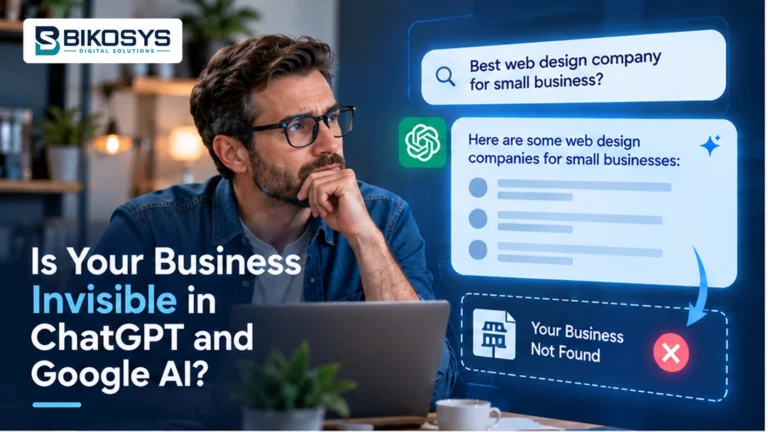
Local SEO and AI-Powered Search Experiences
AI Overviews and other AI features have changed the way some search results are presented, but Google’s guidance remains straightforward: the same foundational SEO practices still apply. There is no special local-AI schema or separate technical shortcut that guarantees inclusion.
For local businesses, the practical priorities are still clear:
- keep the Business Profile accurate and current;
- make important website content available as readable text;
- use internal links so related pages are easy to discover;
- provide useful images and videos where they help the customer;
- make structured data match the visible page;
- publish distinctive information that reflects real local experience.
AI systems can combine information from several sources, which makes consistency more important. If the website shows one phone number, a directory shows another and the Business Profile lists different hours, the business creates uncertainty for both customers and machines.
The best response is not to publish generic “AI SEO” content at scale. It is to make the business information clear, accurate and genuinely useful. Google’s own guidance warns that producing large amounts of low-value generated content can violate scaled-content spam policies.
How Small Businesses Can Compete With Larger Brands
Smaller businesses may not match the backlink profile or advertising budget of a national brand, but they can create stronger local relevance and a more personal customer experience.
Choose a Focused Market
Trying to rank across the entire United States for a local service usually spreads resources too thin. Begin with the markets where the business can deliver reliably and where customer value justifies the effort.
Build the Best Page for the Core Service
A focused, useful service page can outperform several weak pages. Explain the process, customer concerns, local context, pricing factors and proof clearly.
Respond Faster and More Personally
Local search visibility creates an opportunity, but lead handling determines whether that opportunity becomes revenue. Fast responses, accurate availability and clear follow-up can outperform a larger competitor with a slow process.
Use Real Local Proof
Project photos, local testimonials, community partnerships, association memberships and local media coverage are difficult for a distant competitor to imitate credibly.
Keep Improving the Profile and Website
Small gains accumulate. One corrected listing, one useful service page, one new genuine review and one relevant local link may not transform performance alone, but consistent work creates a stronger presence over time.
Common Local SEO Mistakes to Avoid
Using a False or Borrowed Address
A virtual office, mailbox or client address should not be used to create a presence where the business is not genuinely eligible. Suspension and verification problems can erase the visibility the tactic was meant to create.
Creating Duplicate Business Profiles
One eligible location generally needs one profile. Duplicate profiles can split reviews and confuse customers.
Adding Keywords to the Business Name
The profile name should reflect the real-world brand. Keyword additions may create temporary visibility but violate Google’s representation guidelines.
Buying Reviews or Offering Rewards
Incentivized and fake reviews violate policy. A smaller number of genuine reviews is safer and more persuasive than manipulated volume.
Publishing Duplicate City Pages
Changing the city name while repeating the same paragraphs produces little local value. Each page should justify its existence.
Tracking Only Total Website Traffic
Local campaigns should be evaluated through relevant impressions, calls, direction requests, forms, booked appointments and qualified leads. A traffic increase that produces no local business outcome is not enough.
Ignoring the Website After Profile Optimization
The profile and website support one another. A profile may earn the click, but a thin or outdated website can lose the customer.
A Practical Local SEO USA Checklist
Business Profile
- Verify ownership and review user access.
- Use the real business name.
- Select accurate primary and secondary categories.
- Confirm address or service-area settings.
- Update hours, phone numbers, website and services.
- Add genuine, high-quality business photos.
Website
- Create focused service pages.
- Use location pages only for genuine service areas.
- Keep one clear H1 and logical supporting headings.
- Add descriptive internal links.
- Check mobile forms, phone links and navigation.
- Review titles, descriptions, canonicals and indexation.
Reviews and Reputation
- Create a consistent, non-incentivized review request process.
- Reply professionally to positive and negative feedback.
- Monitor recurring customer concerns.
- Report only reviews that genuinely violate policy.
Citations and Authority
- Correct outdated names, addresses and phone numbers.
- Prioritize relevant local and industry listings.
- Seek legitimate community, association and partner mentions.
- Avoid automated low-quality directory packages.
Measurement
- Review Search Console by page, query and country.
- Track calls, forms and booked enquiries.
- Compare performance over meaningful periods.
- Record changes so improvements can be evaluated properly.
How Long Does Local SEO Take?
There is no universal timetable. A verified profile with incomplete information may improve quickly after corrections, while a new website in a competitive city may need months of consistent work before meaningful organic growth appears.
Timeframes depend on:
- the age and condition of the website;
- the competitiveness of the service and location;
- the strength of existing reviews and citations;
- the number and quality of relevant local links;
- the accuracy of the Business Profile;
- the quality of service and location content;
- how consistently the strategy is maintained.
It is better to measure direction than demand a fixed ranking date. Look for broader relevant query coverage, improved average positions, stronger profile engagement and more qualified enquiries. Rankings can fluctuate by searcher location, device and competition, so one manual search is not a complete report.

Need a Local SEO Strategy Built Around Your Market?
BIKOSYS helps businesses strengthen local search visibility through technical SEO, useful service content, website improvements, internal linking and practical measurement. We focus on accurate, sustainable work rather than profile shortcuts or copied location pages.
Frequently Asked Questions About Local SEO in the USA
Is local SEO different from traditional SEO?
Yes. Traditional SEO may target national or international searches, while local SEO focuses on searches connected to a location and often includes Google Business Profile, map results, local reviews, citations and location-relevant website content. The two disciplines still share technical SEO, content and authority fundamentals.
What is the difference between “local SEO USA” and “USA local SEO”?
They express essentially the same intent. A strong article or service page can use both naturally, but there is no need to create separate pages for each word order.
Can a service-area business rank without displaying its address?
Yes, an eligible service-area business can configure areas it serves and hide the address when customers are not served at that location. The profile must still represent a real eligible business and follow Google’s guidelines.
Do online-only businesses qualify for a Google Business Profile?
Generally, no. Google Business Profiles are intended for eligible businesses that meet customers at a location or travel to customers. Online-only businesses should focus on organic SEO, paid media and other relevant discovery channels.
How important are reviews for local SEO?
Reviews help customers evaluate the business, and Google states that review quantity and positive ratings can support local prominence. Quality, recency and genuine customer experience matter more than chasing an arbitrary number.
Can I offer a discount in exchange for a Google review?
No. Google prohibits incentivized reviews, including reviews posted in exchange for discounts, payments, free goods or services. Ask for honest reviews without offering a reward.
How many location pages should a business create?
Create only as many as the business can support with real service coverage and distinctive, useful content. A smaller group of strong pages is usually better than dozens of duplicated city pages.
Does LocalBusiness schema improve map rankings?
LocalBusiness structured data can help Google understand information on the website and may support eligible search features, but it does not guarantee higher map rankings. The markup must match visible, accurate business details.
Do Google Business Profile posts improve rankings?
Posts can communicate offers, events and updates to customers, but they should not be treated as a guaranteed ranking factor. Use them because the information is useful, not because an agency promises a direct position increase.
Should every local business target “near me” in its page text?
No. Search engines understand “near me” through the searcher’s location and business information. Write naturally about the service and genuine locations instead of repeating “near me” across headings and paragraphs.
How should local SEO performance be measured?
Measure relevant Search Console impressions and clicks, Business Profile interactions, phone calls, forms, bookings and qualified enquiries. Rankings should be reviewed as trends because results vary by searcher location and device.
Can local SEO work without backlinks?
A business can gain some visibility through profile quality, relevance and reviews, but relevant links and local mentions contribute to prominence and can make a meaningful difference in competitive markets.
Is local SEO a one-time project?
No. Business information changes, competitors improve, reviews accumulate and website content becomes outdated. A strong foundation can be built as a project, but continued monitoring and improvement are needed.
Can BIKOSYS improve an existing local SEO campaign?
Yes. We can review the website structure, Business Profile, search queries, location pages, citations, internal links, technical issues and conversion paths before recommending the highest-priority improvements.
Final Thoughts
Local SEO in the United States is competitive, but the work that matters is understandable. Represent the business accurately, create pages that answer real local needs, earn genuine customer feedback, maintain consistent information and measure outcomes instead of chasing isolated rankings.
The companies that benefit most are not always those with the largest budgets. They are the ones that build a trustworthy local presence and maintain it. A complete Business Profile, a useful website and a steady reputation program can create a durable advantage when each part supports the others.
To discuss a tailored local strategy, explore our local SEO services. For broader organic search campaigns, visit our SEO services page, or contact BIKOSYS for a review of your current local search foundation.