Introduction
In today’s competitive digital landscape, the importance of a visually appealing and functional website cannot be overstated. Your website is your digital storefront, and just like in the real world, it needs to be both inviting and efficient. For businesses in the USA, partnering with the best web design company can be a genuine game-changer — not just a design upgrade, but a direct driver of trust, traffic, and revenue.
Whether you’re launching a new business or rebranding an established one, the quality of your website can make or break your online success. In this guide, we’ll break down exactly why choosing the best web design company in the USA is one of the most consequential decisions a growing business can make, and what to actually look for when making that choice.
The Importance of Professional Web Design
Your website makes an impression almost instantly — often within the first few seconds — and those first moments matter more than almost any other part of the customer journey. A visually appealing, easy-to-navigate site builds trust and establishes credibility before a visitor reads a single word of your content. A poorly designed website does the opposite: it drives potential customers away, often permanently, sending them straight to a competitor with a cleaner, faster, more trustworthy-looking site.
A great website needs to do more than just look good. It needs to offer a seamless user experience, optimized content, fast load times, and full mobile compatibility — all working together, not as separate checkboxes.
Key Elements of Effective Web Design
- Responsive Design: With the majority of web traffic now coming from mobile devices, having a fully responsive website is non-negotiable. A responsive design ensures your website looks sharp and functions correctly across phones, tablets, and desktops alike, rather than forcing visitors to pinch and zoom their way through your content.
- User Experience (UX): Good UX design focuses on creating an intuitive, easy-to-navigate interface. Clear calls-to-action, well-organized menus, logical page hierarchy, and fast loading times are all integral to keeping a visitor engaged instead of bouncing within seconds.
- SEO Integration: A great website isn’t just about looks — it needs to be built for search engines from the ground up. The best web design companies integrate SEO strategy at the structural level, not as an afterthought, ensuring your site is positioned to rank well and attract organic traffic from day one.
- Security Features: As cyber threats continue to rise, website security has to be a priority, not an add-on. The best web design companies build in SSL certificates, encryption, and secure payment processing for e-commerce sites as standard practice.
- Page Speed and Performance: A beautiful website that loads slowly still loses customers. Optimized images, clean code, and efficient hosting all contribute to load times that keep visitors on the page instead of hitting the back button.
- Clear, Purposeful Content: Design and content have to work together. A site can be visually flawless and still fail to convert if the messaging doesn’t clearly explain what the business does and why the visitor should care.
Web Design Trends Shaping the USA Market in 2026
The expectations US customers bring to a website have shifted significantly, and the best web design companies are adapting their approach accordingly. A few trends stand out this year. Minimal, high-contrast layouts are replacing cluttered homepages, giving visitors a clearer path to the information they actually want. AI-assisted personalization is becoming more common, with websites adjusting content or product recommendations based on visitor behavior in real time. Accessibility has moved from a nice-to-have to a baseline requirement, both for legal compliance and because accessible design genuinely improves usability for everyone.
Micro-interactions — small animations that respond to clicks, hovers, or scrolls — are being used deliberately to guide attention rather than as decoration. And increasingly, businesses are prioritizing Core Web Vitals, Google’s real-world performance metrics, as a design requirement rather than a post-launch fix, because these metrics now directly influence both user experience and search visibility.
None of these trends work in isolation. A modern website in the USA market blends performance, accessibility, and personalization into a single cohesive experience, rather than treating each as a separate initiative.
Why Web Design Directly Impacts Business Growth in the USA
It’s easy to think of a website as a static asset — something you build once and revisit occasionally. In reality, for US businesses competing in crowded digital markets, your website functions more like an active sales channel than a brochure. Every design decision, from button placement to page layout, has a measurable effect on whether a visitor converts into a customer.
Businesses that invest in professional web design typically see this show up in a few concrete ways: lower bounce rates because visitors find what they need quickly, higher conversion rates because calls-to-action are clear and well-placed, stronger brand perception because the site looks credible and current, and better search visibility because the site is technically sound from the start.
None of these outcomes happen by accident. They’re the result of deliberate design choices made by a team that understands both the aesthetic and the strategic side of web design — which is exactly why the choice of web design partner matters as much as it does.
How to Choose the Best Web Design Company in the USA
Not every web design agency is built the same, and the difference between a mediocre partner and the right one often shows up months later, in traffic numbers and conversion rates you can’t easily undo. Here’s what to actually evaluate when comparing web design services USA-wide:
- Portfolio depth, not just polish. Look for real examples of work in your industry or a comparable one, not just visually striking mockups. A strong portfolio shows range and problem-solving, not just aesthetics.
- A process that includes SEO from the start. If SEO is treated as a separate add-on service rather than part of the build process, that’s a red flag — technical SEO decisions made after launch are far more expensive to fix.
- Mobile-first thinking. Ask specifically how they approach responsive design, not just whether the site “works” on mobile.
- Clear post-launch support. Websites need maintenance — security updates, plugin updates, performance monitoring. A company with no maintenance offering is handing you a liability, not a finished product.
- Transparent communication and timelines. A professional web design company in the USA should give you a clear scope, timeline, and revision process upfront — vague answers here tend to predict vague delivery later.
- Proof of results, not just design awards. Ask for case studies that show business outcomes — traffic growth, conversion improvements — not just visual before-and-afters.
Why Work With a USA-Based Web Design Team
Time zone alignment, cultural familiarity with the US market, and straightforward communication are easy to underestimate until they’re missing. A USA-based, or USA-focused, web design team understands local consumer behavior, regional design expectations, and compliance considerations like ADA accessibility standards in a way that’s harder to replicate from a distance.
This doesn’t mean every capable web design partner has to be physically headquartered in the US. What matters more is a team with deep, demonstrated experience serving the US market specifically — understanding how American consumers browse, what builds trust with them, and how local business regulations intersect with web design decisions like accessibility, data privacy, and e-commerce compliance.
E-commerce Website Design Considerations for US Businesses
For businesses selling products or services online, web design carries even higher stakes. An e-commerce site isn’t just representing the brand — it’s directly handling transactions, and every point of friction in that process costs revenue. Product pages need clear, high-quality imagery and concise, benefit-focused descriptions. Checkout flows should be as short as possible, with guest checkout available and payment options that match what US shoppers expect, including major credit cards and digital wallets.
Trust signals matter enormously in e-commerce specifically: visible security badges, clear return policies, and genuine customer reviews all reduce the hesitation that causes cart abandonment. And because e-commerce sites tend to have more pages and more complex navigation than a standard business site, clean information architecture becomes even more critical — both for user experience and for search engines trying to understand and index the catalog correctly.
Common Mistakes Businesses Make When Choosing a Web Design Partner
A few patterns show up again and again when businesses end up unhappy with their website investment. Choosing based on price alone is the most common one — the cheapest option frequently costs more in the long run through lost traffic, poor mobile performance, or a site that needs to be rebuilt within a year. Skipping the discovery phase is another: agencies that jump straight into design without understanding your business, audience, and goals tend to produce generic sites that don’t convert.
Treating the website as a one-time project rather than an evolving asset is a third common mistake. The best web design company in the USA will talk to you about ongoing updates, testing, and iteration — not just a single handoff and goodbye.
Web Design and SEO: Why They Can’t Be Separated
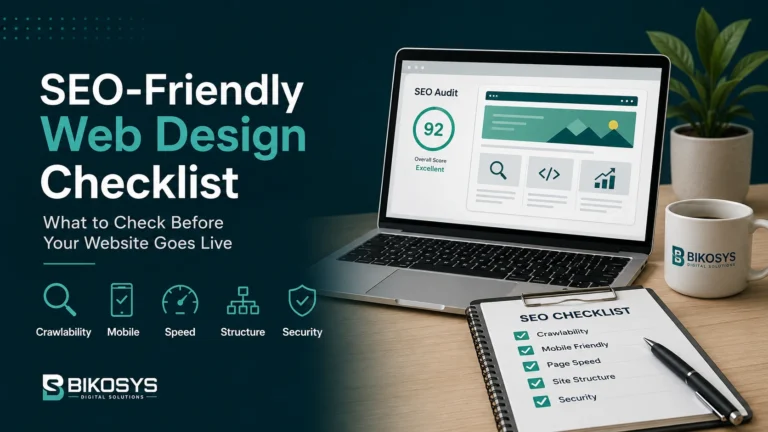
A common misconception is that web design and SEO are two separate disciplines handled by two separate teams. In practice, the technical foundation of your website — site speed, clean code, mobile responsiveness, structured data — is inseparable from how well it performs in search. A stunning website built on a slow, poorly structured foundation will struggle to rank, no matter how much content you publish afterward.
This is why choosing a partner who understands both SEO-friendly website design and ongoing SEO strategy together matters more than picking separate vendors for each. If you’ve already read our breakdown of why local SEO matters more than ever in the USA market, you’ll recognize the same principle here: technical foundation and content strategy have to move together, not in sequence.
Measuring the Return on Investment of a Professional Website
A website redesign is only worth the investment if you can actually measure whether it worked. Before starting a project, establish a clear baseline: current traffic, bounce rate, average session duration, mobile versus desktop conversion rates, and lead or sales volume attributable to the site. Without this baseline, it becomes nearly impossible to judge whether a new design actually improved business outcomes or simply changed the visual style.
After launch, the most meaningful metrics to track are conversion rate, not just traffic volume, mobile performance specifically, page load speed, and search visibility for your core terms. A well-executed redesign should show measurable improvement across most of these within the first two to three months. If traffic stays flat or drops after launch, that’s an early signal worth investigating immediately rather than waiting to see if it settles on its own.
It’s also worth tracking qualitative feedback, not just numbers. Are sales or support teams hearing fewer complaints about the website being confusing or hard to use on mobile? Are prospects mentioning the site positively during sales conversations? These signals often show up before they’re fully reflected in the analytics dashboard.
A Practical Checklist for Your Next Website Project
- Define clear business goals for the website before design begins
- Confirm the agency builds with responsive design as standard, not optional
- Ask how SEO is integrated into the build process, not added afterward
- Review real portfolio examples relevant to your industry
- Clarify post-launch support and maintenance terms upfront
- Set a realistic timeline and get it in writing
- Plan for ongoing content and design updates, not a one-time launch
Frequently Asked Questions
How much does professional web design cost in the USA?
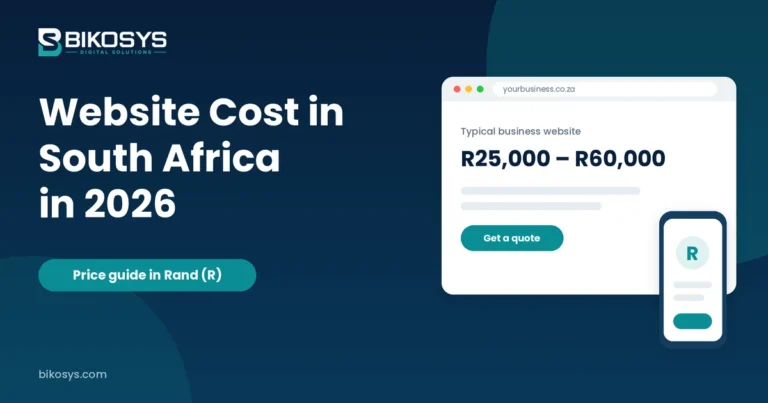
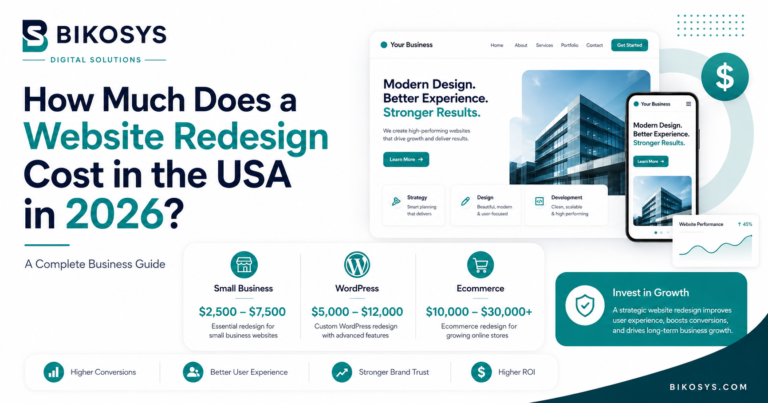
Costs vary widely based on scope — a basic business site differs significantly from a custom e-commerce build. What matters most is evaluating cost against the quality of strategy, SEO integration, and post-launch support included, not comparing raw price alone.
How long does it take to build a professional website?
Most business websites take several weeks to a few months depending on complexity, content readiness, and revision rounds. A rushed timeline is often a sign that discovery and planning are being skipped.
Do I need a new website if my current one already ranks on Google?
Ranking well doesn’t always mean converting well. If your site brings in traffic but not inquiries or sales, a redesign focused on UX and conversion — while preserving your existing SEO equity — is often the right move rather than starting from zero.
Is responsive design really necessary for every business website?
Yes. With the majority of search traffic now mobile, a non-responsive site actively loses visibility in search rankings and loses visitors on the page itself, regardless of industry.
What’s the difference between web design and web development?
Web design focuses on look, layout, and user experience, while web development handles the underlying technical build. The best web design company in the USA typically offers both under one roof, so design decisions and technical execution stay aligned.
Should my website be rebuilt from scratch or redesigned incrementally?
It depends on the underlying technical foundation. If the current site is fundamentally sound but outdated visually, an incremental redesign preserves SEO equity while modernizing the experience. If the site has deep technical or structural problems, a full rebuild is often more cost-effective long term.
How do I know if my website is actually hurting my business?
Warning signs include high bounce rates, low mobile conversion compared to desktop, slow load times, an outdated visual style compared to competitors, and difficulty updating content without developer help. Any combination of these is worth a professional audit.
Final Thoughts
Choosing the best web design company in the USA isn’t just a cosmetic decision — it’s a foundational business investment that shapes how customers perceive you, how easily they can find you, and whether they convert once they arrive. A site built with responsive design, strong UX, integrated SEO, and real security isn’t a luxury; it’s the baseline for competing in 2026’s digital landscape.
Businesses that treat their website as an evolving, strategic asset — rather than a one-time project — consistently outperform those that don’t. If your current website isn’t pulling its weight, the right partner can change that.