
Ask three web designers what a website costs in South Africa and you may get three very different answers. One quote might be below R10,000, another around R30,000, and a third well into six figures. The difference is usually not just the designer’s hourly rate. It is the scope: how much strategy, design, content, development, SEO, testing and support are actually included.
This guide is for South African business owners who want a realistic budget before speaking to a freelancer or agency. It covers typical project ranges, the costs that are easy to overlook, and the questions that make quotes easier to compare.
How much does a website cost in South Africa in 2026?
As a practical planning range, a professionally built small-business website may cost roughly R16,500 to R60,000. A straightforward brochure site can sit near the lower end. A more involved WordPress build with custom design, stronger content structure, SEO foundations and integrations can move higher. Ecommerce stores and custom applications cost more because there is more to design, build and test.
These figures are not an industry tariff. South African web design prices vary widely by provider, scope and quality. Treat them as budgeting guidance, then compare what each quote actually includes.
Website cost in South Africa by project type
The table below is a useful starting point for budgeting. Two websites with the same number of pages can still cost very different amounts if one needs original design, copy support, booking logic or third-party integrations.
| Project type | Planning range (ZAR) | Usually suited to |
|---|---|---|
| Starter brochure site (5–8 pages) | R16,500 – R25,000 | Small businesses, consultants and simple service sites |
| Professional WordPress business website | R25,000 – R60,000 | Service businesses that need stronger design, content structure and SEO foundations |
| WooCommerce ecommerce store | R40,000 – R120,000+ | Businesses selling products online |
| Custom web application or client portal | R100,000+ | Booking systems, dashboards, membership areas and custom workflows |
| Website redesign | R16,500 – R60,000+ | Businesses with an outdated, confusing or underperforming website |
These ranges are indicative planning figures, not fixed market rates. Final pricing depends on the brief, content, design requirements, integrations and the amount of custom development involved.

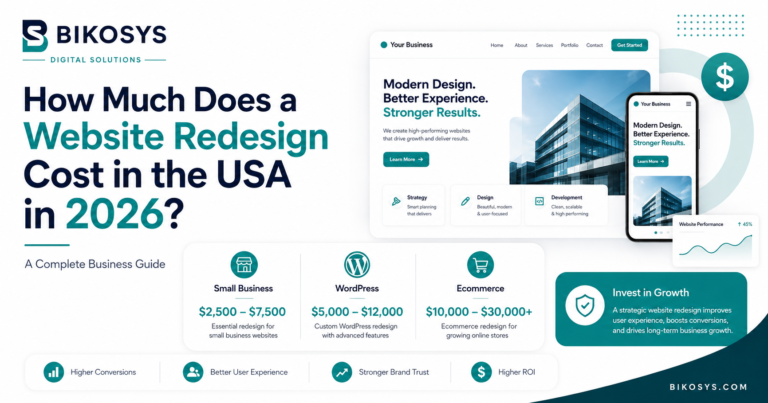
BIKOSYS pricing: our website projects start from US$1,000, while a typical professional business website is often around US$2,500. Ecommerce and custom application work is scoped separately. For South African projects, we can quote in ZAR using the exchange rate applicable when the proposal is prepared.
What changes the price of a website?
1. Page count is only the starting point
A five-page business site is obviously smaller than a 40-page site, but page count does not tell the whole story. A single landing page with a calculator, booking flow or custom form can require more work than several straightforward information pages.
2. Original design takes more work than a lightly edited template
A pre-built theme can reduce design time. A more tailored design needs decisions about layout, typography, visual hierarchy, mobile behaviour and conversion paths. That extra work is what makes the site feel like it belongs to the business rather than to the theme.
3. Features and integrations can change the scope quickly
Online bookings, WhatsApp actions, payment gateways, CRM integrations, gated content, multilingual pages and custom dashboards all add design, development and testing time. Ask whether the quote includes configuration and testing, not just installation.
4. Content has to come from somewhere
If your team supplies approved copy, images, logos and product information, the project can move faster. If the provider must plan the content, rewrite service pages, source images or organise a large catalogue, that should be reflected in the budget.
5. SEO and performance should be considered during the build
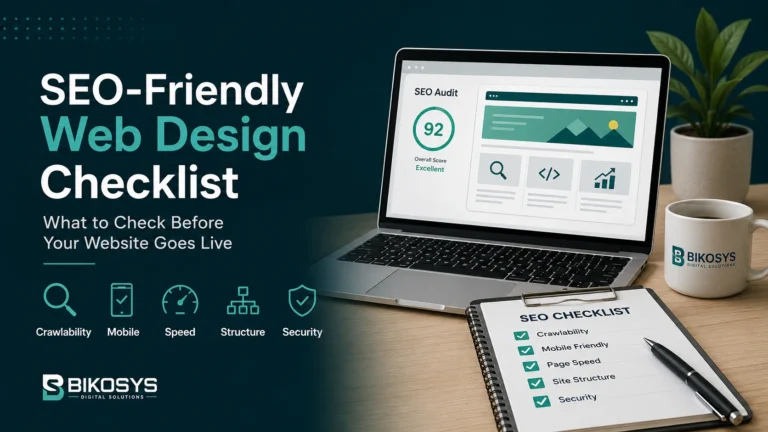
Search-friendly structure, sensible internal linking, metadata, image optimisation, responsive layouts and good performance are easier to handle during development than after launch. Our SEO-friendly web design checklist explains the practical checks we recommend before a site goes live.
South Africa-specific website costs and decisions
Global pricing articles often miss a few details that matter to South African businesses.
Local payment gateways
For ecommerce, the checkout setup can affect both project cost and ongoing fees. South African businesses commonly consider gateways such as PayFast, Yoco, Ozow and Peach Payments. The right choice depends on the store, settlement requirements, supported payment methods and transaction costs. Our ecommerce website development service covers gateway setup as part of a broader store build where required.
POPIA and personal information
If a website collects names, email addresses, phone numbers, booking details or order information, the business needs to think carefully about how that information is collected, stored and used. POPIA requirements depend on the organisation and its processing activities, so a privacy policy and sensible form wording are only part of the picture. The Information Regulator South Africa is the appropriate official source for POPIA guidance.
Mobile experience and data use
For many South African customers, the phone is the first screen they will use to judge a business. Heavy video, oversized images, intrusive pop-ups and awkward forms can make a technically responsive site frustrating in practice. Mobile design should be reviewed as a real user journey, not just as a smaller desktop layout.
Hosting quality
Hosting affects speed, uptime, backups and how quickly a problem can be recovered. The cheapest plan is not always the cheapest decision if outages or poor performance cost enquiries. Ask where backups are stored, how often they run and what support is available when something goes wrong.
WhatsApp can be part of the customer journey
For businesses whose customers already use WhatsApp, a clear click-to-chat option can remove unnecessary friction. It is a small technical feature, but it should still be planned properly so it does not cover content or become intrusive on mobile.
Ongoing website costs people often forget
The build is only one part of the budget. A business website also has recurring costs, and these vary by provider and technical setup.
- Domain name: often around R100–R250 per year for a standard domain, although premium or specialist domains can cost more.
- Hosting: basic shared hosting may start at a few hundred rand per year, while managed WordPress, cloud or higher-performance plans can run into hundreds or thousands of rand per month.
- Premium software: some themes, plugins, form tools, backup systems or ecommerce extensions use annual licences.
- Maintenance: updates, backups, security checks, monitoring and small fixes may be handled internally or through a maintenance plan. See our website maintenance services.
- SEO and content: search work is normally an ongoing activity rather than a one-off plugin setting. The budget depends on competition, locations, content needs and business goals.
It is worth asking for these recurring costs before signing a build proposal. A low development quote can look less attractive if the ongoing licences and support model are unclear.
Our website design and maintenance guide for South African businesses goes into more detail about what happens after launch.

Freelancer, web design agency or DIY builder?
There is no single right choice. The better question is which option matches the complexity of the project and the amount of support you expect after launch.
DIY website builders can work for a very small site where the owner is comfortable handling the layout, content and updates. They reduce upfront cost, but the business also takes responsibility for more of the work.
Freelancers can offer excellent value, especially for well-defined projects. The important checks are portfolio quality, availability, handover arrangements and who supports the site after launch.
A web design agency usually brings several disciplines together: strategy, design, development, SEO and ongoing support. That can be useful when the website is commercially important or when several systems need to work together.
Whichever route you choose, confirm who owns the domain, hosting account, website files and administrator access. Your business should not be dependent on one supplier simply to access its own website.
Why WordPress is often a practical choice
WordPress is not the right platform for every project, but it remains a practical option for many service businesses because it is widely supported, flexible and comparatively easy to hand over between competent providers.
That flexibility can reduce platform lock-in. If the relationship with one developer ends, the business can usually move the website to another WordPress specialist rather than starting again from zero. If you are comparing platforms, read how to choose the right CMS for your business or explore our WordPress development services.
Warning signs in a website quote
A low price is not automatically a bad sign, and an expensive quote is not automatically a good one. The concern is when important details are missing.
- The scope is vague. You cannot tell how many pages, revisions or features are included.
- Mobile, performance, SEO and security are never discussed.
- The provider keeps control of the domain or hosting account.
- There is no clear payment schedule or delivery process.
- Nothing is said about handover, updates or post-launch support.
- Every extra request is described as included, but there is no written boundary around the project.
If the existing website is the problem, a full rebuild may not always be necessary. Our guide to website refresh vs. redesign vs. rebuild explains the difference. If the site looks fine but is not producing enquiries, start with 12 reasons a website may not be generating leads.
How to get a website quote you can actually compare
Before asking for prices, write a short brief. It does not need to be technical. Five points are enough:
- What the website needs to achieve: enquiries, sales, bookings, credibility or something else.
- The main pages and features you expect.
- Two or three websites whose style or functionality you like.
- Your realistic budget range and preferred launch window.
- What you already have: copy, photography, branding, product data and login access.
Then ask each provider to explain what is included and what is not. A clear scope makes the quotes easier to compare and reduces surprises after the project starts.

Need a realistic website budget?
Tell BIKOSYS what you are trying to build or improve. We will review the scope and explain the most practical next step, whether that is a smaller refresh, a full redesign, a WordPress build or something more custom.
You can also review our pricing and web design services before getting in touch.
Request a Website Quote