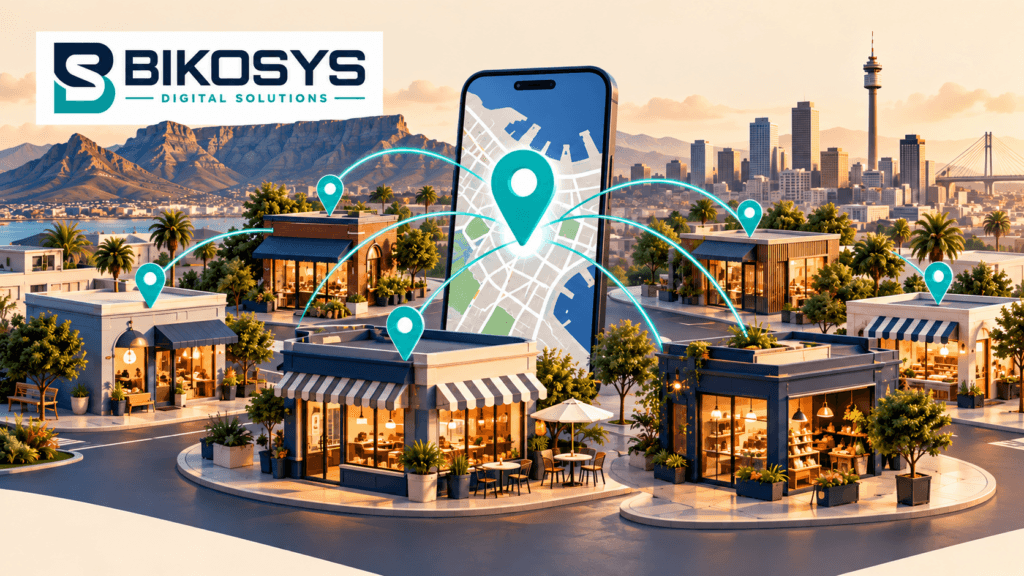
Most South African small businesses lose local customers for a boring reason: when someone searches, the business is either missing from Google Maps or its listing is half empty. No photos, the wrong hours, one old review. The customer taps the next result and never thinks about you again.
This is a ground-up guide to local SEO South Africa businesses can actually use. You’ll see how to get on Google Maps, how to move up, what to put on your website, and how to show up when people ask AI tools like ChatGPT, Gemini and Perplexity for a business near them. None of it needs a big budget. It needs accurate details and steady follow-through.
Quick Answers
If you’re short on time, these are the short versions. The rest of the post explains each one.
- What is local SEO? It’s improving how your business appears when people search for something in or near a specific place.
- How do I get my business on Google Maps? Create and verify a Google Business Profile with your real name, category, address or service areas, phone number and hours.
- How do I rank higher? Fill in every part of your profile, collect genuine reviews, keep your details identical across the web and build useful pages on your website.
- How long does it take? Small profile fixes can help within weeks. Competitive cities like Johannesburg or Cape Town usually take a few months.
- Can I guarantee a first-place ranking? No. Anyone who promises that is guessing or selling.
What Local SEO Actually Means
Local SEO is the part of search optimisation that deals with place. A person types “plumber in Randburg” or just “plumber”, and Google decides which businesses to show based on the search and where the person is.
Google says three things drive local results: relevance (does your business match the search), distance (how far away are you) and prominence (how well known and trusted do you look). You can’t move your shop closer to a customer, so most of the work goes into the other two.
Why It Matters More Here Than You Might Think
Most South Africans search on their phones. They tap call, they tap WhatsApp, or they tap directions. Desktop-era thinking, where the website is the main event, misses a lot of that. For many local businesses the Google listing is the first and sometimes only thing a customer sees.
There’s a practical angle too. A customer dealing with a burst pipe or a dead geyser wants an answer in minutes, not a comparison spreadsheet. Whoever looks reachable, nearby and well reviewed wins the call. That’s why small business SEO in South Africa often pays back faster than broad national campaigns.
How Do I Get My Business on Google Maps in South Africa?
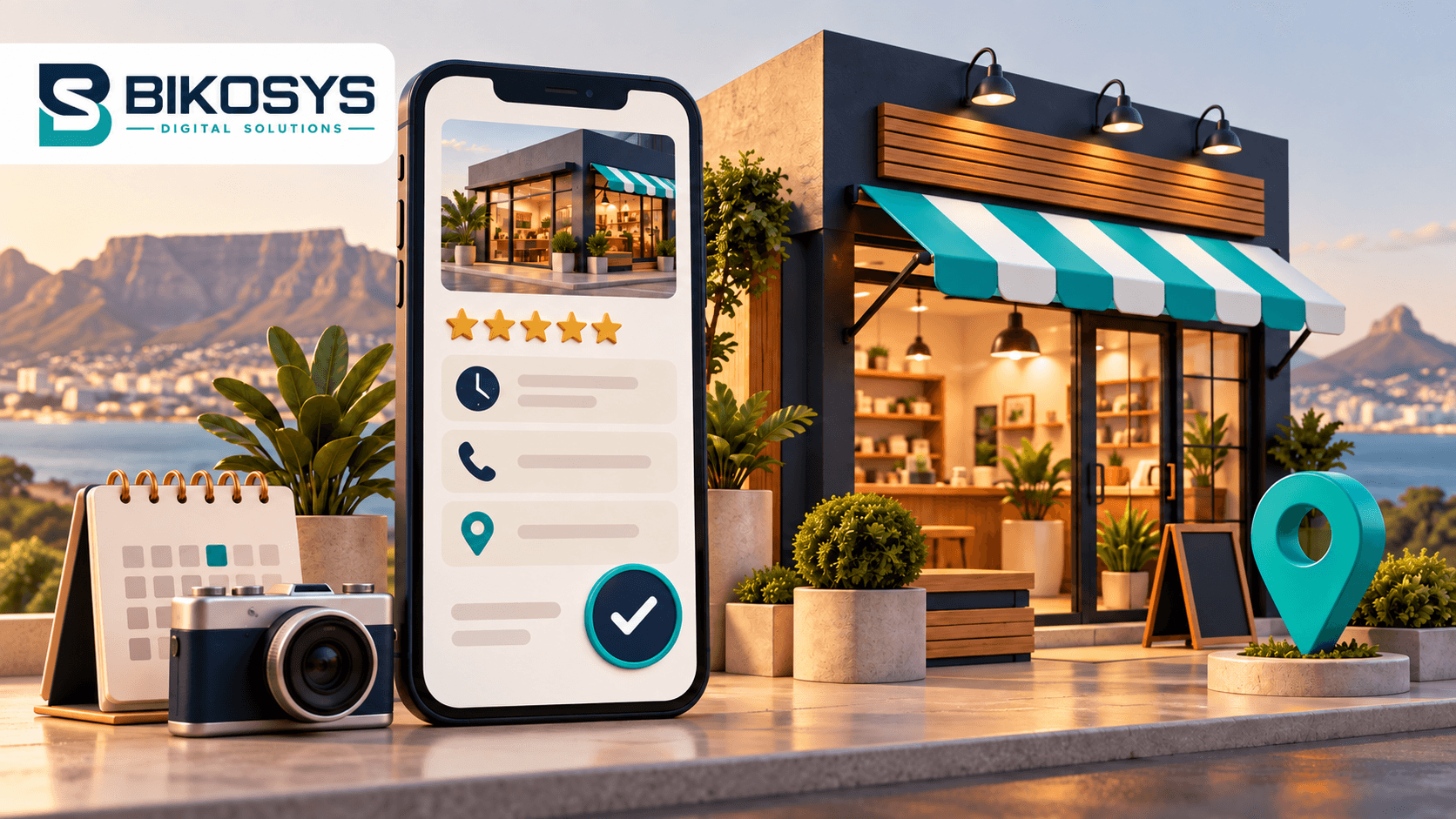
You need a Google Business Profile. It’s free, and it’s the single most useful local SEO tool you have. Here’s what to get right:
- Use your real business name. Not “Best Plumber Sandton 24/7”. Adding keywords or suburbs to the name breaks Google’s rules and can get your profile suspended.
- Pick the right main category. “Plumber”, “Dentist”, “Web designer”. Add extra categories only if they’re true.
- Be honest about location. If customers visit you, show your address. If you travel to them, list the areas you serve and hide the address.
- Use a +27 number and make sure it matches your website exactly.
- Add real photos. Your shopfront, your team, your van, finished jobs. Stock photos don’t help.
- List your services in plain language and keep hours current, including public holidays.
- Add your website and booking link so people can act straight from the listing.
A quick warning: online-only businesses and lead-generation sites usually don’t qualify for a profile. If that’s you, focus on website SEO instead.
How Do I Rank Higher on Google Maps?
Once you’re verified, ranking is mostly about three habits: complete information, steady reviews and consistent details everywhere. Check these first:
- Is every section of your profile filled in?
- Do your name, address and phone number match your website and social pages exactly?
- Have you had a new review in the last month?
- Do you reply to reviews?
- Does your website have a page for each main service you list?
If the answer to any of those is no, start there before spending money on anything else.
What Should My Website Do for Local SEO?
Your profile gets you seen. Your website convinces people. For local SEO it needs a few things.
One Page per Main Service
A single “Services” page that lists everything rarely ranks for anything. Give each main service its own page that explains what it is, who it’s for, how you work, what affects the price and how to contact you.
City or Suburb Pages, but Only If They’re Real
If you genuinely serve Durban and Pretoria, separate pages can make sense. But copying one page ten times and swapping the city name is a fast way to get nothing. Each location page needs something only that area has: the suburbs you cover, response times, jobs you’ve done there, questions customers from that area ask.
A rough feel for the big markets:
- Johannesburg and Sandton: crowded and competitive, so go narrow. Suburb-level pages beat “Johannesburg” on its own.
- Pretoria: steady demand for professional and home services. List the areas you actually reach.
- Cape Town: competitive across trades, hospitality and professional services. Reviews carry a lot of weight.
- Durban: a busy market for trades, retail and health. Neighbourhood detail helps.
- Gqeberha and Bloemfontein: often less crowded, so solid basics can go further.
Easy Ways to Contact You
Put a call button and a WhatsApp link where people can see them without scrolling. Plenty of good rankings die on pages where it takes three taps to find a phone number.
Planning these pages before a site is built saves a lot of rework. Our SEO-friendly website design work starts with that structure.
How Do I Get More Google Reviews?

Ask. Most happy customers will leave a review if someone asks at the right moment and makes it easy.
- Ask right after the job is finished, while the experience is fresh.
- Send a direct review link on WhatsApp or SMS, or put a QR code on invoices.
- Reply to every review. Keep replies short and human.
- For a bad review, thank the person, say what you’ll do, and take the detail offline.
- Don’t buy reviews and don’t offer discounts for them. Google bans both, and it can remove reviews or restrict your profile.
- Don’t only ask the customers you think are happy. Ask everyone.
Read your reviews as feedback, too. If three people mention slow replies, that’s a business problem, not an SEO problem.
What Are Citations and Why Does Consistency Matter?
A citation is simply a mention of your business name, address and phone number on another site, like a directory or an industry listing. Google compares these mentions, and when they agree, it trusts you more.
Start by fixing what already exists: old addresses, retired numbers, duplicate listings. Then add the directories that matter for your industry, not hundreds of junk ones. Keep one master note with your official name, address format, phone number, website and hours, and copy from it every time.
Technical Things That Quietly Hurt Local Rankings
- Slow mobile pages. Compress images and remove plugins you don’t use. Test on mobile data, not just office Wi-Fi.
- Unreliable hosting. If your site is down when customers search, you lose them.
- Pages blocked from Google. A forgotten “noindex” setting is more common than you’d think.
- No structured data. LocalBusiness schema helps Google read your details, as long as it matches what’s on the page.
- Expired SSL. Browser warnings scare people off.
- POPIA. If your forms collect personal details, explain how you use them, keep them secure and establish a lawful basis for processing under POPIA. Obtain consent where required.
On WordPress, outdated plugins and broken forms are the usual culprits, which is why regular website maintenance belongs in any local SEO plan. If you’re still budgeting for a site, our website cost guide for South Africa breaks down typical prices in Rand.
What Do People Actually Search? Google and AI Questions
People now ask search engines and AI assistants in full sentences. Writing your pages to answer those questions directly is one of the simplest ways to earn visibility. These are the kinds of questions worth answering on your site:
Questions People Ask Google
- plumber near me Johannesburg
- best dentist in Cape Town
- web designer Durban prices
- how to add my business to Google Maps
- cheap SEO company South Africa
Questions People Ask AI Tools
- How do I get my business on Google Maps in South Africa?
- What’s the best way to get more customers online in Johannesburg?
- How much does local SEO cost in South Africa?
- Is local SEO worth it for a small business?
- How do I get more Google reviews in South Africa?
- Can I rank on Google without a website?
- How long does local SEO take?
- What should I put on my Google Business Profile?
- Does POPIA apply to my business website?
- How do I find a good SEO company for a small business in Cape Town?
I can’t give you real search volumes for AI prompts, because those figures aren’t public. Treat these as realistic starting points, then check what actually brings you impressions in Google Search Console and what your customers ask on calls and WhatsApp.
How Do I Show Up in AI Search Answers?
AI tools like ChatGPT, Gemini and Perplexity, plus Google’s AI Overviews, pull from pages that are clear, trustworthy and consistent. There’s no secret trick and no guarantee, but these habits help:
- Answer the question first. Put a direct two- or three-sentence answer under each question heading, then explain.
- Use plain headings. A heading written as a real question matches how people ask.
- Be specific. Name the city, the service and the audience. Vague pages get skipped.
- Keep your details identical everywhere. Name, address, phone, hours and services should agree across your site, profile and listings.
- Add an FAQ section with honest answers that visitors can read easily. Structured data should match visible content; no special schema guarantees AI visibility.
- Show real experience. Case studies, photos and named authors give AI systems and readers a reason to trust you.
- Earn mentions elsewhere. Reviews, directories, local press and partners all signal that you’re a real business.
- Make the page easy to read. Text should be real text, not locked inside images.
Google’s own guidance says the same fundamentals apply to its AI features as to normal search. There’s no separate switch for AI visibility, so good basic SEO is also good AI SEO.
Local SEO for Different Kinds of Business
Trades and Home Services
Plumbers, electricians and builders win on speed, service areas and photos of real work. Reviews that mention the suburb and the type of job are gold.
Medical and Health
Clinics and dentists need accurate categories, clear hours and a professional site. Be careful with health claims and keep information current.
Legal and Professional Services
Law firms and accountants benefit from detailed practice-area pages and guides that answer the questions clients really ask.
Restaurants and Retail
Photos, menus, hours and reviews matter most. Update hours before holidays, not after.
Agencies and B2B
Even business-to-business companies can win local work when clients prefer someone nearby. Pair your profile with strong service pages and case studies.
Mistakes That Cost Businesses Rankings
- Stuffing suburbs or keywords into the profile name.
- Using a virtual office, a mailbox or a friend’s address.
- Running duplicate profiles for one location.
- Publishing near-identical city pages.
- Buying reviews.
- Judging success by traffic alone instead of calls and enquiries.
- Filling the profile in once and never touching it again.
- Paying someone who guarantees a number one spot.
Should I Do It Myself or Hire an SEO Company?
You can handle the basics yourself: claiming the profile, fixing details, adding photos and asking for reviews. That costs time, not money.
Hiring help makes sense if you’re in a crowded city, have several locations, need website changes or simply don’t have the hours. When you compare local SEO services in South Africa, look for:
- A written scope, so you know what you’re paying for each month.
- Honest talk about what’s realistic, with no guaranteed rankings.
- Reports on calls, forms and enquiries, not only keyword positions.
- Real examples and client feedback.
- Willingness to fix the website, not just the profile.
Prices vary a lot with business size, number of locations and competition, so ask for a proposal rather than a flat number.
How to Measure Local SEO Results
Check these once a month:
- Google Search Console: impressions, clicks, average position and the searches that bring people in.
- Business Profile insights: calls, direction requests and website clicks.
- Real enquiries: phone calls, WhatsApp chats, forms and bookings.
- Reviews: how many, how recent and what they mention.
Rankings shift by location and device, so one manual search proves little. Compare the last 28 days against the 28 before.
A 30-Day Local SEO Plan
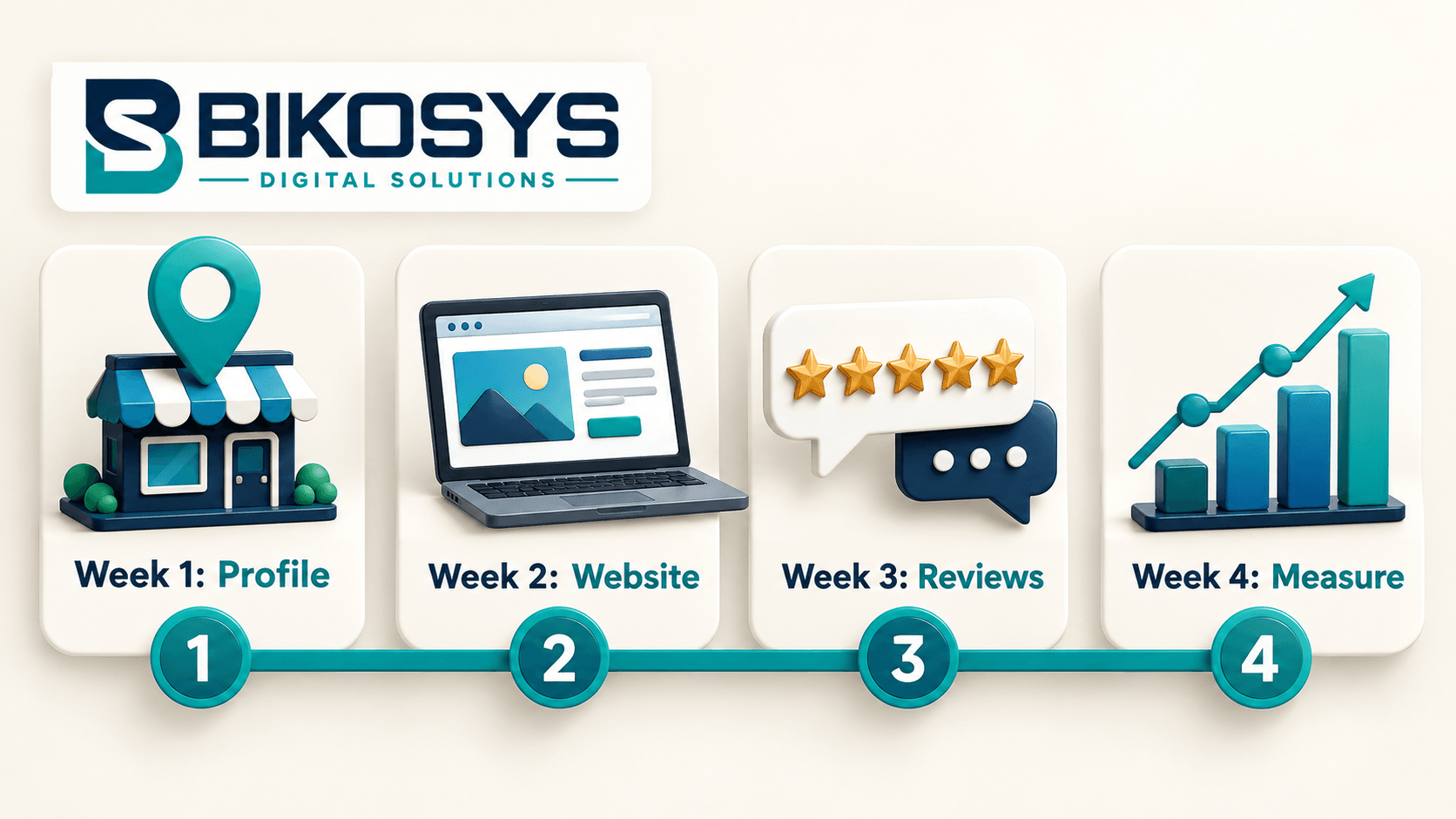
Week 1: Profile
- Verify your Google Business Profile.
- Correct your name, categories, hours, phone and service areas.
- Upload at least 10 real photos.
Week 2: Website
- Create or improve your main service pages.
- Add call and WhatsApp buttons.
- Fix the biggest mobile speed problems.
Week 3: Reviews and Listings
- Start asking for reviews.
- Correct inconsistent listings.
- Reply to every review you haven’t answered.
Week 4: Check and Plan
- Review Search Console and your profile insights.
- Count the calls, forms and WhatsApp enquiries.
- Decide on the next page or article to write.
How Long Does Local SEO Take?
It depends. Fixing a neglected profile can move things within a few weeks. A new website in a crowded market, say plumbing in Johannesburg, can take months. Judge the direction: more impressions, better positions, more profile actions and more enquiries over time.
Want Help With Local SEO in South Africa?
BIKOSYS helps businesses improve local visibility through technical SEO, service pages, website improvements and practical reporting. If you’d like a review of where you stand, look at our local SEO services and wider SEO services, or get in touch.
You may also like our guide to website design and maintenance for South African businesses, and our local SEO guide for the USA.
Where to Start
Don’t try to do everything this week. Claim and complete your Google profile, ask your next five customers for a review and check that your phone number matches everywhere. Those three things alone put you ahead of many local competitors. Then build outward, one page and one improvement at a time.
For official guidance, see Google’s local ranking guidance and Google’s guidance on generative AI search.
Frequently Asked Questions
What is local SEO?
It’s the practice of improving your visibility in searches tied to a place, across Google Maps, the local results and the location pages on your website.
How much does local SEO cost in South Africa?
It depends on your industry, how many locations you have and how competitive your market is. Ask any provider for a written scope and monthly report, and walk away from guaranteed rankings.
Do I need a website if I have a Google Business Profile?
Yes. The profile can earn the click, but the website is where people learn more and decide to trust you.
Can I rank without a shop?
Yes, if you’re an eligible service-area business. List the areas you really serve and hide your address when customers don’t visit you.
Do reviews affect my ranking?
They help customers decide and can support local prominence. Genuine, recent reviews matter more than a big number.
Do I need a page for every city?
Only for cities you serve, and only if each page has something useful and specific. A few strong pages beat many copies.
Is local SEO different from normal SEO?
Yes. Normal SEO targets broader searches. Local SEO focuses on place and adds your Business Profile, reviews and citations. Both share technical and content basics.
Does WhatsApp help local SEO?
Not directly as a ranking factor, but it makes contacting you easy, which turns visibility into enquiries.
Can I appear in ChatGPT or Gemini answers?
No one can guarantee it. Clear pages, consistent business details, honest reviews and helpful FAQs give you the best chance.
How long before I see results?
Some changes show up in weeks. Competitive markets usually take months of steady work.
Can I do local SEO myself?
You can do the basics. Technical problems, several locations and content planning are where professional help pays off.