BIKOSYS Digital Solutions
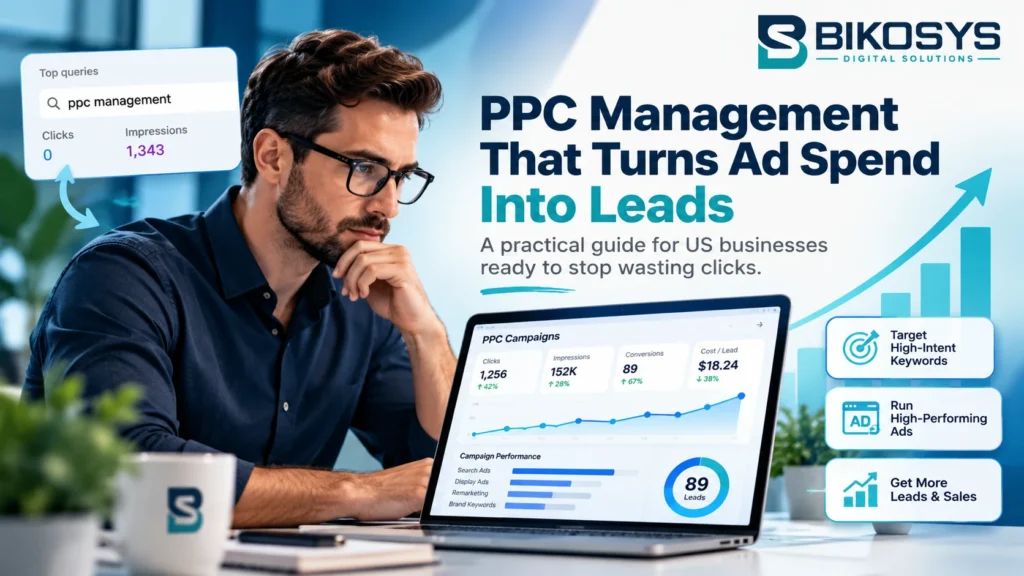
It’s 8:30 on a Monday morning. You open Google Ads expecting good news. People are clicking your advertisements. The platform is reporting activity. Your budget is disappearing on schedule.
But your phone isn’t ringing. Your contact form is quiet. Sales haven’t improved.
If people are clicking your ads, why aren’t they becoming customers?
Consider a hypothetical Dallas plumbing company spending $2,000 on Google Ads. It gets 250 clicks and three enquiries, none of which becomes a customer. The dashboard shows activity; the business sees very little return.
The immediate instinct is to raise the budget or abandon Google Ads. But the real problem may be irrelevant searches, the wrong audiences, a confusing website, inaccurate conversion tracking, or an offer that doesn’t persuade visitors. Effective PPC management connects every paid click to an actual business objective.
Your Google Ads Are Getting Clicks — So Where Are the Customers?
A click is not a customer. Visitors may be researching, comparing prices, looking for jobs, or searching for something your business does not provide.
| Metric | What it tells you |
|---|---|
| Impressions | How often an ad was displayed |
| Clicks | How often someone clicked |
| Enquiries | People who contacted your company |
| Qualified leads | Enquiries fitting your service, budget and location |
| Customers | Prospects who purchased |
| Revenue and profit | Commercial outcome after relevant costs |
Imagine Campaign A receives 500 clicks and ten enquiries, but none qualifies. Campaign B gets 120 clicks and six enquiries, four of which fit the business. The second might be more valuable despite lower traffic. The question isn’t how many people arrived? It’s who arrived, what they cost, and what happened next?
What Effective PPC Management Actually Means
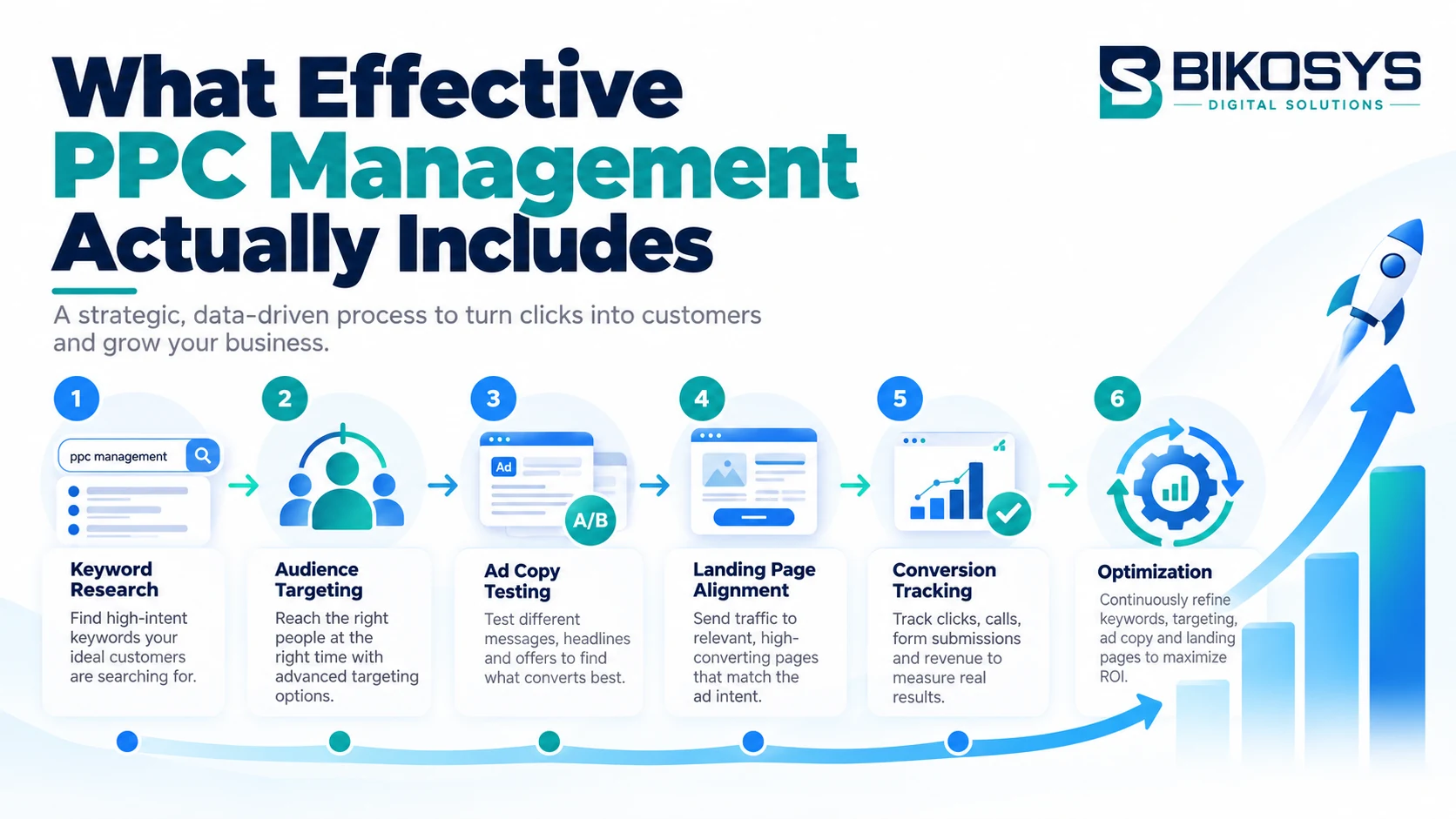
PPC management is the ongoing planning, launching, measurement, and improvement of paid advertising. It can cover Google Ads, Microsoft Advertising, Meta, YouTube and other channels. It involves keyword intent, audience and location targeting, honest ad messaging, focused landing pages, reliable conversion tracking, deliberate budget allocation and iterative optimization.
These elements cannot be treated independently. A strong ad cannot rescue a broken form. A beautiful landing page is wasted on irrelevant searches. Smart bidding relies on useful conversion signals. The goal is not merely to buy traffic, but to create a measurable route to valuable enquiries and customers.
9 PPC Management Mistakes That Waste Your Advertising Budget
1. Targeting Keywords That Attract Researchers Instead of Buyers
Not every Google search signals purchase intent. A hypothetical Phoenix roofing contractor might bid on roof repair and attract people seeking DIY instructions alongside homeowners seeking a professional. Emergency roof leak repair Phoenix is more specific about urgency and geography, although its profitability still depends on costs and actual conversions.
What goes wrong: businesses choose keywords for search volume rather than service relevance and intent. What to do: group terms by service, buying stage and location; then compare search queries against qualified enquiries rather than just clicks.
2. Ignoring Negative Keywords and Irrelevant Search Terms
A commercial cleaning company might pay for visits from people searching for residential cleaning jobs, supplies or tutorials. Google Ads negative keywords can exclude unwanted searches, and the search terms report helps reveal some searches that triggered ads, though not every individual query is shown.
What goes wrong: irrelevant traffic absorbs budget. What to do: inspect search terms regularly, add careful exclusions at appropriate campaign or ad-group levels, and check that negative match choices do not remove relevant prospects.
3. Sending Paid Traffic to a Generic Homepage
Someone clicking an ad for commercial HVAC replacement in Chicago expects immediate details of that service. If the landing page is a general homepage with dozens of links, they must search for the offer themselves. Many will leave.
What goes wrong: advertising promises one thing but the destination obscures it. What to do: align headlines, service details, location, proof and a clear contact action. A dedicated landing page is not automatically superior, but a focused relevant experience is worth testing.
4. Running Ads Without Reliable Conversion Tracking
Perhaps the form succeeds but no conversion fires. Perhaps every button click is recorded as a lead. Or the same enquiry is counted twice. In each case optimization is guided by distorted information.
What goes wrong: decisions use incomplete or inflated results. What to do: define meaningful conversions, test form submissions and calls, deduplicate events, and distinguish actual leads from preliminary engagement. Where appropriate and compliant, connect qualified-lead or closed-sale outcomes to campaigns.
5. Using Weak or Misleading Ad Copy
Best Services. Great Quality. Contact Us Today. says little. Compare an example accounting-firm ad: Small Business Tax Preparation | Book a Consultation. The latter tells a buyer what service is available and what to do next.
What goes wrong: vague claims attract unfocused interest or fail to differentiate. What to do: test truthful, specific messages about services, qualifications, availability and customer needs. Never promise prices, guarantees or credentials you cannot support.
6. Targeting the Wrong Locations, Audiences, or Operating Hours
A hypothetical Tampa pest-control company may receive clicks from outside its service territory if geographic options are not aligned with its operations. A phone-led business may pay for overnight traffic when calls go unanswered—though forms and bookings can still convert after hours.
What goes wrong: you attract people you cannot serve or fail to respond when they enquire. What to do: examine location settings and reports, service areas, operating hours, device behavior and response workflows. Don’t apply blanket exclusions without data.
7. Changing Bids and Budgets Without Enough Data
A frustrated owner raises budgets Monday, changes bidding Tuesday, rewrites ads Wednesday and restructures the campaign Thursday. By Friday no one knows which change mattered.
What goes wrong: rapid unstructured changes obscure cause and effect. What to do: verify measurement, form a hypothesis, make controlled changes, and allow appropriate data to accumulate. Scale when evidence shows valuable outcomes, not simply because impressions are rising.
8. Ignoring Mobile Experience and Landing-Page Friction
A homeowner taps a plumbing ad on a phone. A popup blocks the number, the form asks twelve questions, and submission fails. The advertiser pays for a click but never sees an enquiry.
What goes wrong: the website puts obstacles between intent and action. What to do: test the full mobile journey, page speed, readability, phone links, forms, confirmation messages and actual email delivery. See our guide to why websites fail to generate leads.
9. Measuring Clicks Instead of Qualified Leads and Customer Value
Consider two hypothetical campaigns each spending $1,000. Campaign A earns 200 clicks and 20 enquiries, but only one customer. Campaign B earns 100 clicks and ten enquiries, but three customers. A wins on cheap clicks and lead volume; B wins on actual customers. Profit still depends on order value, delivery expenses and other acquisition costs.
What goes wrong: attractive dashboards hide weak commercial returns. What to do: measure qualified leads, customers, acquisition cost, revenue and margin. The objective is business growth, not an impressive click count.
Getting Traffic but Not Enough Enquiries?
Before increasing spend, check the complete journey—search query, targeting, ad message, landing page, conversion measurement and lead response. BIKOSYS Digital Solutions offers PPC management services for US businesses, including campaign optimization, tracking and reporting. Find out where the existing journey may be breaking down before committing more budget.
How to Know Whether Your PPC Campaign Is Actually Profitable
Cost per click (CPC) is advertising spend divided by clicks. Spending $500 for 100 clicks equals $5 per click.
Conversion rate is conversions relative to the measured base. Ten enquiries from 200 clicks yields a 5% click-to-enquiry rate.
Cost per lead (CPL) is spend divided by tracked leads. $1,200 spent for 24 enquiries is $50 per enquiry—but doesn’t establish quality.
Qualified lead rate is the share of leads meeting business criteria. If six of those 24 enquiries qualify, the qualified rate is 25% and advertising-only cost per qualified lead is $200.
Customer acquisition cost (CAC) relates acquisition expense to customers won. A complete CAC definition may include management fees, sales costs and other acquisition expenses, not just ad spending.
Return on ad spend (ROAS) is attributed revenue divided by advertising spend. $6,000 attributed revenue from $1,500 ad spend is 4.0× ROAS, not 400% profit.
Profit and lifetime value matter because margins, delivery costs, repeat orders and retention shape what a customer is worth.
A hypothetical campaign’s economics
| Measurement | Example |
|---|---|
| Monthly ad spend | $1,500 |
| Clicks | 300 |
| Average CPC | $5 |
| Enquiries | 30 |
| CPL | $50 |
| Qualified leads | 12 |
| Cost per qualified lead | $125 |
| New customers | 4 |
| Advertising-only cost per customer | $375 |
| Attributed revenue | $6,000 |
| ROAS | 4.0× |
All figures are illustrative, not Bikosys client results. Evaluate profit only after accounting for service delivery, management and other relevant costs.
DIY PPC vs. Professional PPC Management
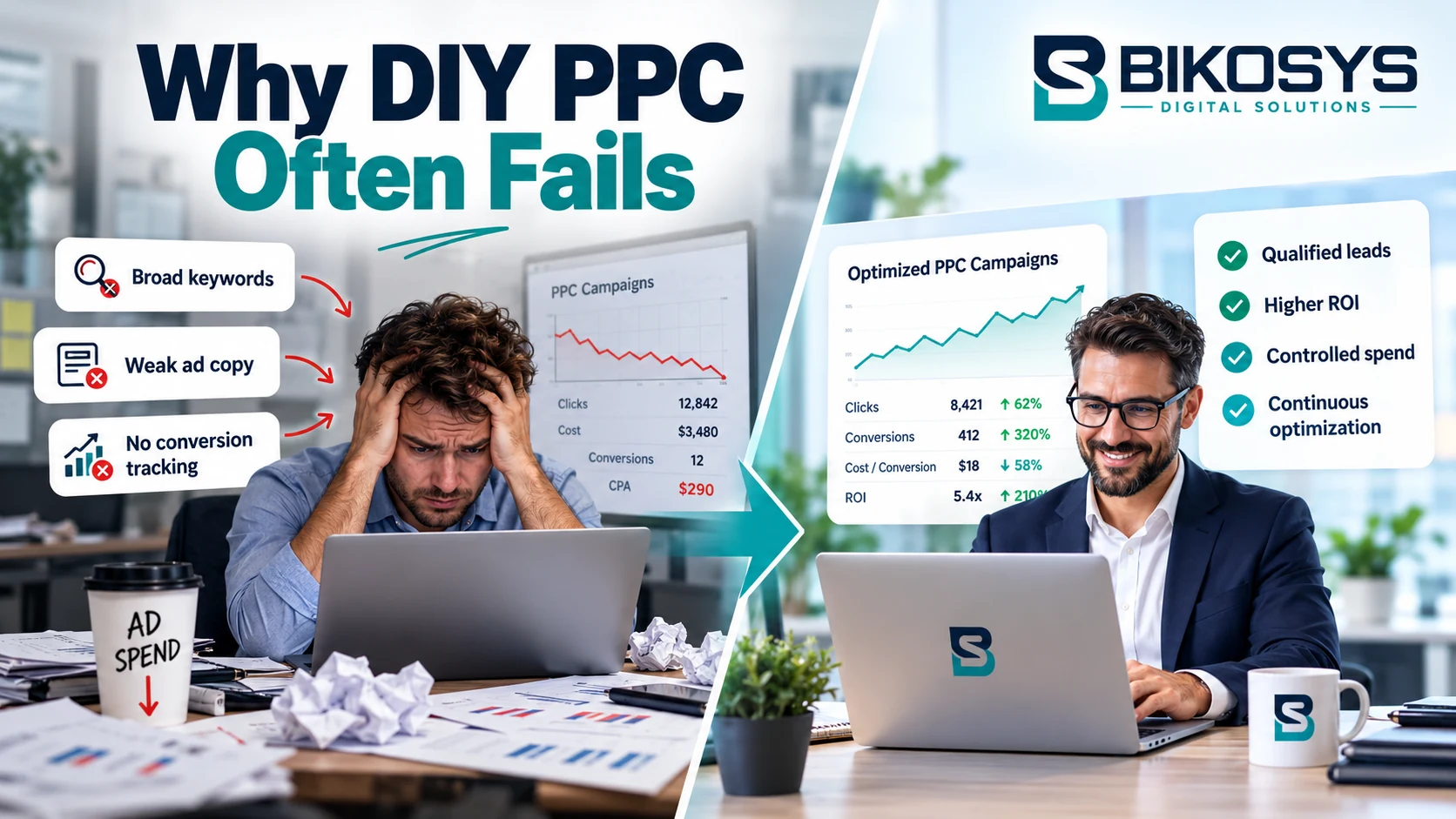
Many small businesses can manage straightforward campaigns themselves. The decision depends on the time available, skills, advertising complexity and risks of mistakes.
| Question | DIY PPC | Professional management |
|---|---|---|
| Direct external fee | Usually none | Agency or specialist fee |
| Time demand | Owner or staff | Delegated within contract scope |
| Tracking and analysis | Internal responsibility | May be part of service |
| Testing and optimization | Must be maintained in-house | Planned ongoing work |
| Landing page work | Internal or outsourced | May be coordinated |
| Reporting | Internally produced | Should be transparent and regular |
| Best suited to | Simpler campaigns with capable staff | More complex or time-intensive programs |
DIY can make sense for limited campaigns with reliable measurement and active oversight. Professional help may be valuable when multiple services or regions are involved, lead quality is poor, or the team lacks time to optimize. An agency does not guarantee results; evaluate its process, accountability and performance.
What a Good PPC Management Agency Should Actually Do
A capable agency reviews your account and goals before recommending wholesale changes. It should explain how campaigns are organized, how commercial intent and exclusions are managed, how conversions are validated, how budgets are controlled, and how landing-page issues are identified. Testing should be deliberate, and reports should explain what changed, why, and what it means for the business.
Before hiring, ask: Who owns the ad account and conversion data? How are qualified leads defined? Are landing-page changes included? How are fees calculated? What happens if clicks rise but customer enquiries do not? How will management prove the value of its changes? The answers matter more than a glossy sales presentation.
How Much Does PPC Management Cost in the USA?
Separate ad spend paid to an advertising platform from management fees paid for campaign work. Some agencies charge a flat monthly amount; others calculate a percentage of advertising spend. Setup fees or hybrid arrangements may apply.
A single-location contractor advertising one service has different requirements from a multistate ecommerce brand with complex tracking. Scope, platforms, campaign volume, reporting, creative, landing-page support and measurement complexity all influence price. Don’t accept invented market averages or assume the cheapest quote is best. Request a written scope and clear account ownership terms. A higher fee is not proof of better outcomes either.
A Practical 30-Day PPC Improvement Plan
| Period | Focus | Actions |
|---|---|---|
| Week 1 | Audit measurement and search terms | Confirm forms and conversions, inspect search queries, flag irrelevant traffic |
| Week 2 | Improve relevance | Review negatives, location, messaging, campaign structure |
| Week 3 | Reduce landing-page friction | Test mobile experience, offer clarity, calls to action and forms |
| Week 4 | Evaluate outcomes | Review qualified leads, acquisition economics and controlled next tests |
Thirty days should establish better evidence and an improvement process; it cannot promise specific returns. If conversion volume is low, avoid dramatic decisions from small samples. Fix obvious errors, then collect more useful data.
Frequently Asked Questions
What does PPC management include?
It typically includes research, campaign setup, targeting, creative testing, bid and budget oversight, conversion tracking, reporting and ongoing optimization. Scope varies by agreement.
Why am I getting Google Ads clicks but no leads?
Potential causes include irrelevant queries, unsuitable audiences, weak landing pages, uncompetitive offers, broken forms and inaccurate tracking. Investigate actual searches and the customer journey before spending more.
How much should a small US business spend on PPC?
There is no universal starting figure. Set a responsible test budget based on your market, expected customer value, competitive costs and cash flow.
Is Google Ads better than Facebook Ads?
Neither always wins. Google Search can capture existing search demand; Meta can support audience discovery and demand creation. Choose based on the business and customer behavior.
Should I hire a PPC management company?
Consider it when spend, complexity, unreliable tracking or limited staff time justify dedicated expertise. Simpler campaigns can be managed in-house.
How long before PPC campaigns produce useful performance data?
Ads may start receiving traffic soon after launch, but sound decisions need sufficient relevant results and accurate tracking. Timing depends on volume, market and campaign design.
Can a landing page improve PPC results?
A relevant, usable page may reduce friction and improve enquiries, but results should be tested rather than assumed.
How do I know if my PPC agency is doing a good job?
Review qualified leads, meaningful acquisition metrics, tracking accuracy, understandable reporting, transparent changes and alignment with business goals—not clicks alone.
Stop Paying for Clicks That Never Become Customers
Your next improvement might not be a bigger budget. It could be a better search-term filter, honest ad messaging, an easier enquiry form, corrected tracking, or a more convincing service page. Ask three questions: Are we reaching the right people? Do they have a clear reason to choose us? Can we tell whether those visitors become customers?
Find Out Where Your Advertising Budget May Be Going Wrong
BIKOSYS Digital Solutions helps US businesses approach paid advertising as a measurable customer-acquisition process. Our PPC management services include research, campaign setup, targeting, ad optimization, conversion tracking and performance reporting. We can discuss your current difficulties and determine what deserves investigation before you expand spending.
Explore BIKOSYS PPC Management Services and Request a PPC Review
Your next customer matters more than your next click.
Further reading
- Google Ads — Search Terms Report
- Google Ads — Negative Keywords from Search Terms
- Google Ads — Improve Conversion Rate
- Google Ads — Enhanced Conversions for Leads
All illustrative businesses and calculations are hypothetical; none are represented as verified BIKOSYS results.