CMS development · USA
Flexible CMS Solutions for Easy Content Management
Your website should be simple for your team to manage and strong enough to support the next stage of your business. Our CMS website development services help companies create, organize and publish content without depending on a developer for every small update. We plan the content structure, choose the right platform and build the administrative experience around the way your team actually works.
A well-built content management system does more than provide an editing screen. It gives your business a reliable foundation for service pages, landing pages, blog articles, case studies, product information, media files and future campaigns. It should also protect consistency, so different team members can make updates without accidentally breaking layouts or creating confusing page structures.
BIKOSYS develops CMS websites for businesses in the USA and overseas that need practical control, clean design, mobile responsiveness and room to grow. Whether you need a new WordPress website, a WooCommerce store, a migration from an outdated platform or a custom content-management workflow, we begin with your business requirements rather than forcing your project into a one-size-fits-all template.
Get a Free CMS Consultation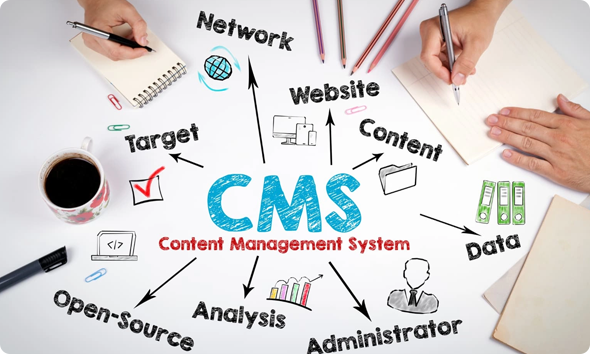
CMS Platforms and Development Options We Support
The best CMS is the one that matches your content, workflow, budget and growth plans. We recommend a platform only after understanding who will manage the site, how often content will change, which integrations are required and how much flexibility the business is likely to need later.

WordPress CMS Development
WordPress is a strong choice for service businesses, professional firms, publishers and growing companies that want a familiar editing experience with broad long-term support. We build structured, responsive WordPress websites with reusable page sections, sensible plugin choices and clear administration. Learn more about our WordPress development services.

WooCommerce CMS Development
For businesses selling products, subscriptions or selected services online, WooCommerce adds e-commerce management to WordPress. We can organize products, categories, checkout settings, customer communication and content so the store remains manageable after launch. The goal is not simply to install a shopping plugin, but to create an e-commerce workflow that supports day-to-day operations.

Custom CMS Development
An off-the-shelf platform is not always the right answer. Businesses with specialized approval processes, complex content relationships, customer portals or unusual publishing requirements may need a custom CMS. We map the workflow first, then design the fields, permissions and administrative tools around those requirements instead of relying on workarounds.
Headless and API-Connected CMS Solutions
A headless CMS separates the content-management backend from the frontend presentation layer. This can be useful when the same content must appear across a website, mobile application, portal or other digital channel. It can also support highly customized frontend experiences. Because headless projects add technical complexity, we recommend this approach only when the business case clearly justifies it.
What a Well-Planned CMS Website Gives Your Business
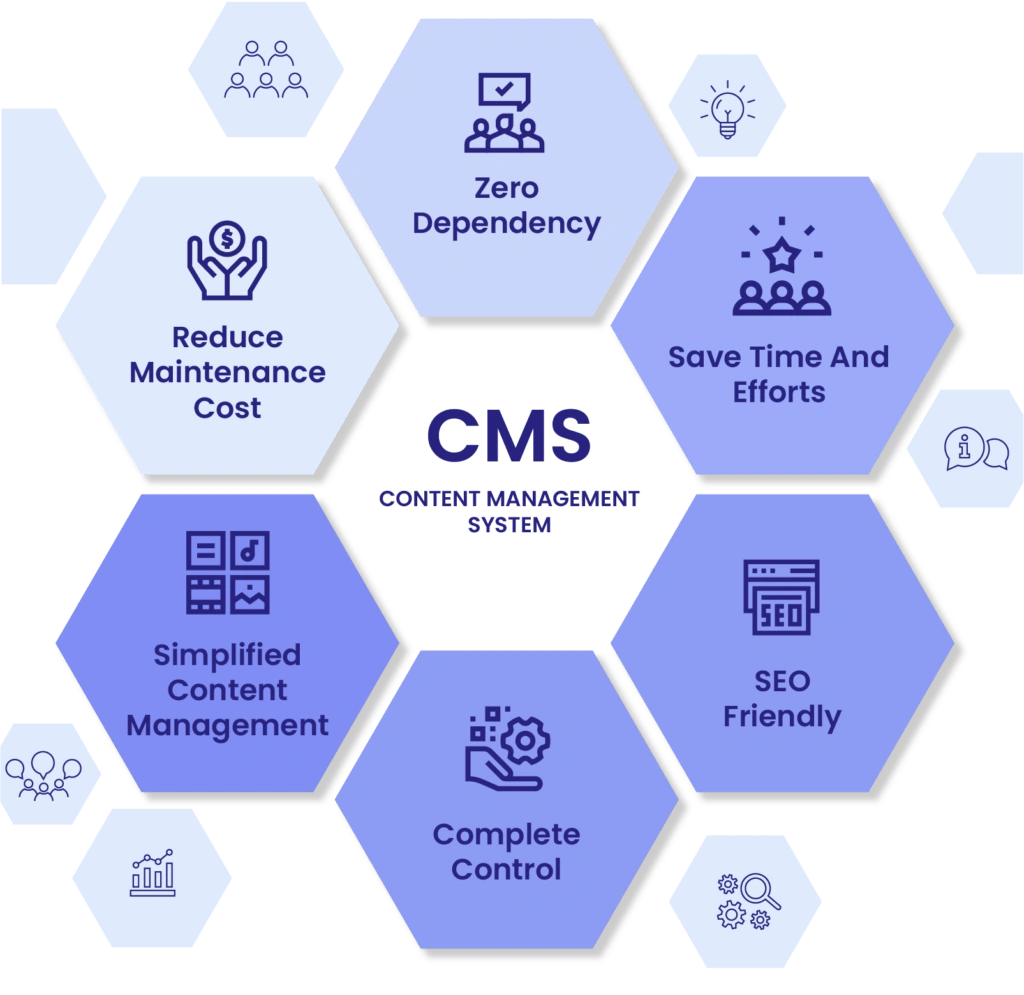
A content management system should remove friction rather than create another technical burden. When the content model, permissions and templates are planned properly, routine updates become faster and the website stays more consistent as it grows.
Direct Control Over Everyday Content
Your team can update service descriptions, staff profiles, locations, images, articles and calls to action without editing code. We create reusable layouts and clear fields so common changes are straightforward.
Consistent Design Across the Website
Structured templates help protect typography, spacing, buttons and page hierarchy. This reduces the risk of individual pages drifting away from the main design whenever new content is added.
Scalable Information Architecture
A growing business needs more than a collection of disconnected pages. We organize categories, page relationships and navigation so new services, resources and locations can be added without rebuilding the entire site.
Appropriate User Roles and Permissions
Not every user needs full administrative access. We can configure roles so writers, editors, managers and administrators have suitable permissions, reducing accidental changes and improving accountability.
Search-Friendly Content Foundations
Clean URLs, logical headings, crawlable navigation, editable metadata and structured content give your SEO work a better technical foundation. For broader growth support, see our SEO services.
CMS Website Development Services Built Around Real Workflows
Many CMS projects fail because the website is designed first and the editing experience is considered later. We reverse that order. Before development begins, we identify the content types your business uses, the people responsible for updates, the approvals required and the systems the website needs to connect with. That planning shapes both the public website and the administrative interface behind it.
CMS Strategy and Platform Selection
We compare your requirements against the strengths and limitations of suitable platforms. This includes content volume, internal skills, expected traffic, integrations, ownership costs, security responsibilities and future expansion. The recommendation should be understandable to a business decision-maker, not buried in technical language.
Custom Page Templates and Content Types
Service pages, team profiles, case studies, locations, resources and product entries often require different fields and layouts. We create reusable templates that make these content types easier to manage while keeping the public-facing design consistent.
Responsive CMS Website Design
The administration experience matters, but customers judge the public website. Our website design and development approach considers mobile layouts, readable typography, clear calls to action and practical navigation from the start.
Third-Party Integrations
Your CMS may need to connect with contact forms, customer relationship systems, email-marketing tools, analytics platforms, payment services, booking tools or internal applications. We plan integrations carefully so data moves reliably and the website remains maintainable.
Content Entry and Migration Support
A new CMS is only useful when the content inside it is complete and organized. We can assist with page migration, formatting, image placement, link checks and redirect planning, depending on the scope of the project.
Training and Documentation
Handover should not leave your team guessing. We provide practical guidance based on the website we built, including how to edit key sections, publish content, manage media and follow the agreed content workflow.
WordPress CMS Development for Business Websites
WordPress is often the most practical platform for a business that wants control without taking on the cost and complexity of a fully custom system. Its flexibility allows us to create corporate websites, service websites, content hubs, landing pages and online stores while keeping the editing experience familiar.
Good WordPress development is not measured by the number of plugins installed. It starts with a clear page structure, a dependable theme or custom component system, and careful decisions about which features genuinely need third-party extensions. Excess plugins can introduce maintenance work, security exposure and performance problems, so we keep the stack focused.
For businesses using visual builders, we create reusable sections and editing rules rather than leaving every page completely open-ended. This gives internal users flexibility while protecting important design and accessibility standards. We also consider how menus, forms, images, metadata and mobile layouts will be managed after launch.
Our WordPress CMS website development services can include new builds, redesigns, WooCommerce configuration, plugin setup, custom functionality, content migration, speed improvements and ongoing support. When a requirement falls outside the sensible limits of WordPress, we explain that early and discuss a more suitable custom or application-based approach.
WordPress May Be a Good Fit When You Need:
- A professional business website your team can update
- Reusable layouts for services, locations or resources
- Blog and media publishing
- WooCommerce product management
- SEO controls for titles, descriptions and page structure
- Integration with forms, analytics and marketing tools
- A widely supported platform with long-term flexibility
When Custom CMS Development Makes Better Business Sense
A custom CMS should solve a real operational problem. It is not automatically better than WordPress, and it usually requires a larger investment in planning, development, testing and long-term support. We recommend custom development when standard platforms would force the business into inefficient workflows or create too many compromises.
Complex Publishing and Approval Workflows
Organizations with multiple departments may need draft reviews, approvals, scheduled publishing and detailed permissions. A custom workflow can reflect how content already moves through the business.
Customer, Member or Partner Portals
Secure portals may require personalized dashboards, document access, account-specific content and connections to other systems. These projects often sit between a traditional CMS and a web application.
Structured Directories and Listings
Property listings, supplier directories, professional databases, product catalogs and location networks may need filters, relationships and administrative tools that go beyond standard page editing.
Multiple Business Systems
Some websites must exchange data with inventory systems, CRMs, internal databases or external APIs. Custom development can create a controlled integration layer around those requirements.
Special User Roles and Permissions
When access depends on department, location, membership level or account status, a tailored permission model may be more reliable than combining several unrelated plugins.
Unique Operational Dashboards
Businesses may need administrators to manage requests, records, documents, statuses or reports through one interface. In these cases, our web application development capabilities may be relevant alongside CMS development.
CMS Migration Without Losing Control of Your Content
Businesses often approach us after their current platform becomes difficult to edit, unsupported, slow or dependent on one developer. A CMS migration can solve those problems, but it needs more planning than copying text from one website to another. Page URLs, metadata, internal links, media files, forms, tracking, redirects and content relationships all need attention.
We begin by auditing the existing content and deciding what should be moved, improved, consolidated or retired. Old websites frequently contain duplicate pages, outdated offers and media files that no longer serve a purpose. Migrating everything without review simply carries old problems into the new system.
Our CMS Migration Work Can Include
- Content and media inventory
- URL mapping and redirect planning
- Page, post, product or resource migration
- Metadata and heading review
- Image optimization and alternative-text checks
- Form and integration replacement
- Internal-link testing
- Mobile and browser quality assurance
- Analytics and Search Console verification
- Post-launch monitoring and issue correction
No responsible provider can promise that a major migration will cause no temporary movement in search visibility. What we can do is reduce avoidable risk by preserving valuable URLs where practical, implementing appropriate redirects, checking crawlability and testing the new site carefully before and after launch.
Security, Performance and Accessibility Are Part of the Build
A CMS website is a living system. It includes software, user accounts, forms, integrations and content that change over time. Security and performance therefore cannot be treated as one-time launch tasks. They need to be considered during development and maintained after the site goes live.
CMS Security Foundations
We apply sensible access controls, use trusted components, reduce unnecessary plugins, configure backups and follow secure update practices. Where appropriate, we also support security monitoring, login protection and recovery planning.
Website Speed and Core Web Vitals
Large images, heavy scripts, poorly chosen plugins and inefficient layouts can make a CMS website slow. We review the technical stack, optimize assets and test important templates on mobile and desktop rather than judging performance from the homepage alone.
Accessible Content Management
Accessibility is easier to maintain when templates encourage proper headings, readable contrast, useful link text, keyboard-friendly controls and meaningful image descriptions. We build the foundation and help your team understand the content practices needed to preserve it.
After launch, our website maintenance services can cover updates, backups, technical checks, security reviews, performance monitoring and routine support. This gives your business a clear path for keeping the CMS dependable rather than waiting for problems to appear.
CMS Website Development for Different Industries
The platform may be similar, but the content structure should reflect how each industry communicates, sells and serves customers. We adapt the CMS around the information visitors need and the updates your internal team will make most often.
Professional Services
Law firms, consultants, accountants and business advisers often need service pages, team profiles, insights, downloadable resources and lead-generation forms managed through a consistent structure.
Construction and Home Services
Contractors and local service providers may need project galleries, service areas, reviews, quote requests and location-focused content that can be expanded as the business grows.
Healthcare and Wellness
Clinics and wellness businesses often manage practitioner information, services, educational resources, locations and appointment links. Clear ownership and update processes are especially important.
Real Estate and Property
Property businesses may require agent profiles, location content, development pages, listings, inquiry forms and integrations with external property systems or internal databases.
Manufacturing and B2B
Manufacturers may need product families, technical documents, certifications, distributor information, industry applications and structured inquiry workflows rather than a simple brochure website.
Education, Training and Nonprofits
These organizations often publish programs, events, resources, updates and downloadable material. A clear editorial structure helps small teams keep information current without rebuilding pages manually.
Our CMS Website Development Process
A successful project depends on decisions made before visual design begins. Our process keeps business goals, content requirements and technical choices connected from discovery through launch.
1. Discovery and Requirements
We discuss your audience, services, content, internal users, current problems and future plans. We also identify required integrations, compliance considerations and the people responsible for approvals.
2. Content and Information Architecture
We organize the website into logical pages, categories and content types. This stage defines how visitors will navigate and how administrators will create and manage information.
3. Platform and Technical Planning
We recommend WordPress, WooCommerce, a custom CMS or another suitable architecture based on the agreed requirements. The recommendation includes the practical reasons behind the choice.
4. UX, Design and Prototyping
Layouts are designed around important user journeys and conversion points. We consider mobile behavior, content hierarchy, forms, calls to action and reusable components before full development.
5. Development and CMS Configuration
We build the frontend templates and configure the backend editing experience. Custom fields, roles, integrations and reusable sections are developed according to the approved scope.
6. Migration, Testing and Quality Assurance
Content is entered or migrated, then tested across relevant devices and browsers. We review links, forms, permissions, responsive layouts, performance and essential SEO settings.
7. Training, Launch and Handover
Your team receives guidance on managing the website. After final checks and approval, we launch the site, confirm tracking and monitor for issues that appear in the live environment.
8. Maintenance and Continued Improvement
After launch, the CMS can be supported through a maintenance plan covering updates, backups, security, fixes and planned improvements as the business evolves.
What Affects CMS Website Development Pricing?
There is no responsible fixed price for every CMS project because the work depends on the content model, design, platform and functionality. A small service website built with structured WordPress templates has a different scope from a multi-role portal or a custom publishing platform.
After a discovery discussion, we provide a clear proposal that explains what is included, what your team needs to supply and which items may be treated as future phases. This helps prevent a low initial estimate from growing through vague assumptions later.
Key Pricing Factors
- Number of page templates and content types
- WordPress, WooCommerce, headless or custom architecture
- Level of custom design and interaction
- Content-entry or migration volume
- User roles and approval workflows
- Third-party integrations and APIs
- E-commerce or portal functionality
- Accessibility and compliance requirements
- Performance, security and hosting needs
- Training, documentation and ongoing support
How to Choose the Right CMS for Your Business
Start with the work the website must support, not the platform name. Consider who will update content, how frequently changes will happen, whether several departments need access, how the website connects to other tools and what is likely to change over the next two or three years.
WordPress is often suitable when a business needs a flexible marketing website with manageable content and widely available support. WooCommerce is useful when product and order management need to sit within that environment. A custom CMS or web application becomes more appropriate when the business requires specialized data, complex permissions or workflows that would otherwise depend on several fragile workarounds.
We explain the trade-offs openly. A platform with more flexibility may require more maintenance. A highly customized system may reduce daily friction but increase the cost of future development. The right decision balances usability, ownership, security, performance and long-term operating cost.
CMS Website Development Services for USA Businesses
For many USA businesses, the website is an active sales, recruitment and customer-service tool. Marketing teams need to launch pages quickly, local businesses need to update services and locations, and growing companies need content systems that do not become harder to manage with every new campaign.
Our CMS website development services are available to businesses that value clear communication, documented scope and practical ownership of their website. Project discussions, reviews, content approvals and training can be handled online, allowing your team to stay involved without adding unnecessary meetings or technical confusion.
Our objective is to build a CMS that your business can use confidently. That means considering the people who publish content, the customers who browse the site and the technical team responsible for keeping it secure. A polished frontend is important, but the project is not complete unless the system behind it is organized and maintainable.
CMS Structure for Search and AI Visibility
Search engines and AI-powered discovery systems rely on understandable website content. A CMS should make it easy to maintain descriptive page titles, one clear main heading, logical subheadings, useful internal links, meaningful image text and consistent information about services and expertise.
The CMS alone cannot create rankings, and no developer can guarantee search positions. However, a clean technical and editorial foundation makes it easier to publish the focused, helpful pages needed for long-term visibility. We coordinate CMS development with technical SEO considerations so the website is easier to crawl, understand and improve.

Why Choose BIKOSYS for CMS Website Development?
We combine website design, WordPress development, custom functionality, SEO awareness and ongoing maintenance in one practical delivery process. The result is a CMS website built for the people managing it as well as the customers using it.
Business-Led Planning
Technical decisions are connected to your content, users and operational goals rather than made for convenience alone.
Clear, Maintainable Builds
We favor focused functionality, reusable structures and sensible documentation over unnecessary complexity.
Support Beyond Launch
Maintenance and improvement options give your business continuity after the initial development work is complete.
Frequently Asked Questions About CMS Website Development
What is CMS website development?
CMS website development is the process of building a website on a content management system that allows authorized users to create, edit, organize and publish content through an administrative interface. The work may include platform selection, design, template development, custom fields, integrations, migration, permissions, security and training.
Which CMS platform is best for a small or growing business?
WordPress is often a practical choice for small and growing businesses because it supports service pages, blogs, landing pages, media and e-commerce through a widely supported ecosystem. The best choice still depends on your content, internal skills, integrations and future plans. We review those factors before recommending a platform.
When should a business consider a custom CMS?
A custom CMS may be appropriate when a business has complex approval workflows, unusual content relationships, specialized user permissions, internal dashboards, portal requirements or integrations that would be difficult to maintain through standard plugins. Custom development should address a defined operational need.
Can you redesign an existing CMS website?
Yes. We can review the current platform, content, technical condition and editing workflow before recommending whether to redesign within the same CMS or migrate to a different solution. A redesign can improve the public experience while also simplifying the administration area.
Can you migrate our website to WordPress or another CMS?
Yes. CMS migration services can include content inventory, page mapping, media transfer, metadata review, redirect planning, form replacement, link testing and post-launch checks. The exact process depends on the old platform and the volume and quality of existing content.
Will a CMS migration affect our SEO?
A migration can affect search visibility if important URLs, content, metadata or internal links change. Careful planning reduces avoidable risk. We preserve valuable URLs where practical, map redirects, review crawlability and test the new site, but we do not promise that rankings will never fluctuate after a significant website change.
Do your CMS website development services include SEO?
Our builds include important technical and structural foundations such as crawlable navigation, logical headings, editable metadata, responsive layouts and performance considerations. Ongoing keyword research, content strategy, link building and campaign work can be handled separately through our SEO services.
How secure is a CMS website?
Security depends on the platform, hosting, code quality, user practices, update routine and installed extensions. No website is completely risk-free. We reduce unnecessary exposure through careful component selection, access controls, backups, secure configuration and an ongoing maintenance plan.
Can the CMS connect with our CRM, forms or marketing tools?
In many cases, yes. A CMS can connect with customer relationship systems, email-marketing services, analytics, payment platforms, booking tools and other applications through supported integrations or custom APIs. We confirm compatibility and data requirements during discovery.
How long does a CMS website development project take?
The timeline depends on the number of templates, custom functionality, content readiness, integrations, migration work and approval speed. After reviewing the scope, we provide a project schedule with clear stages rather than offering a generic timeline that may not fit the work.
How much does CMS website development cost?
Cost varies according to platform, design, content volume, integrations, custom functionality, user roles and support requirements. A structured WordPress website is generally less complex than a custom portal or headless platform. We provide a tailored proposal after understanding the project.
Do you provide maintenance after launch?
Yes. Ongoing plans can include CMS, theme and plugin updates, backups, security checks, performance monitoring, troubleshooting and planned improvements. The level of support can be matched to how critical the website is to your daily operations.
Need a CMS that is easier to manage and ready to grow?
Tell us about your content, workflows and current platform. We’ll recommend a practical way forward.