
Search Engines No Longer Think in Keywords
For most of the last two decades, ranking well meant matching the right words to the right query. That era is closing. Search engines today interpret meaning, context, and intent across an entire topic rather than scanning a page for exact phrases. A page can use the words “SEO agency USA” zero times and still rank for that exact search, because the system now understands what the page is actually about.
This shift matters enormously for businesses trying to be found by US customers. The old approach — write a page, repeat the target phrase a dozen times, wait for rankings — simply doesn’t work the way it used to. Search systems, and increasingly the AI models layered on top of them, are grading pages on clarity, completeness, and whether they genuinely answer the question a person came in with.
Understanding this shift isn’t optional anymore for any business trying to build visibility in the United States market. It’s the foundation everything else in this article builds on.
The Rise of Generative Engine Optimization in the USA
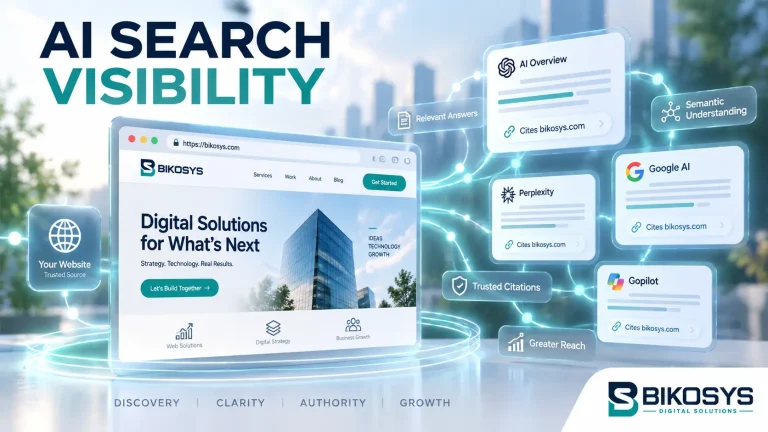
AI-based search systems don’t just list results — they generate answers, summaries, and recommendations directly on the results page. This has given rise to a new discipline: generative engine optimization, often shortened to GEO. Where traditional SEO optimizes for a ranked list of blue links, generative engine optimization USA strategies focus on being the source an AI system chooses to cite, quote, or synthesize when it builds its answer.
For US-based businesses, this changes the competitive landscape in a specific way. A company doesn’t need the single top-ranked page anymore to win the moment of visibility — it needs to be one of the sources an AI system trusts enough to reference. That opens the door for smaller, more focused businesses to compete against much larger, more established sites, provided their content is structured clearly enough for an AI system to extract and use.
Businesses that ignore this shift risk a strange, frustrating outcome: they may still show up in a traditional ranking check, while quietly losing the visibility that actually drives clicks and calls, because AI-generated answers are increasingly satisfying the search before a user ever scrolls further.
What AI Overviews Mean for US Businesses
AI Overviews and similar generative summaries now appear above traditional results for a large share of everyday searches. For a US business trying to reach local or national customers, this means the content strategy has to answer two audiences at once: the human reader, and the AI system deciding what to surface on that human’s behalf.
Practically, that means content needs to be direct. Bury the answer under three paragraphs of preamble, and an AI system may simply skip the page in favor of a competitor who states the answer plainly in the first sentence. This is a meaningful departure from older SEO habits, where longer introductions were sometimes used to build up keyword density before getting to the point.
Why Content Quality Now Decides Visibility
Search engines — and the AI systems built on top of them — now prioritize depth, clarity, and genuine usefulness over surface-level optimization. Pages built purely to rank, with thin explanations stretched around a target phrase, are increasingly outperformed by pages that actually teach the reader something.
This is why SEO content marketing has become less about volume and more about substance. Businesses trying to build visibility for competitive terms like AI search SEO USA are finding that a single, thorough, well-organized page consistently outperforms five shallow ones targeting slightly different keyword variations.
In practice, businesses that are winning this shift are focusing on:
- Topic depth — fully answering a subject rather than skimming it
- Real examples — concrete scenarios instead of abstract claims
- Clear explanations — writing for a first-time reader, not an insider
- Structured information — headings, lists, and formatting that both humans and AI systems can parse quickly
None of this is complicated in concept. It simply requires more editorial discipline than the keyword-stuffing playbook of a decade ago.
Technical Structure Still Matters in an AI-Driven Web
It’s tempting to assume that once content quality becomes the priority, technical SEO fades into the background. The opposite is true. Even in an AI-driven search environment, technical SEO services remain a prerequisite — not an afterthought — because AI systems still have to crawl, index, and parse a page before they can understand or cite it.
Search systems, generative or traditional, still depend on:
- Proper indexing — if a page isn’t indexed cleanly, it doesn’t exist as far as any search system is concerned
- Fast loading pages — slow pages get deprioritized in crawling and ranked lower in user experience signals
- Clean site architecture — a logical structure helps both search bots and AI crawlers understand how pages relate to each other
- Structured data SEO — schema markup gives AI systems an explicit, machine-readable summary of what a page contains, which increases the odds of being cited accurately
Without this technical foundation, even genuinely excellent content may never get the chance to perform, because the systems evaluating it can’t fully access or understand it in the first place. If your site’s technical foundation hasn’t been audited recently, that’s often the highest-leverage place to start — our SEO services include exactly this kind of technical groundwork alongside content strategy.
Building Topical Authority for the US Market
Perhaps the biggest structural shift in how search works today is this: instead of evaluating individual pages in isolation, search engines increasingly evaluate entire websites as a body of work. This is known as topical authority SEO, and it rewards businesses that consistently publish connected, relevant content on a subject rather than a single standalone article.
For a US business competing for attention in a crowded digital market, this means a single well-written page is a good start, but a cluster of related, interlinked content is what actually builds durable visibility. A site that publishes thoughtfully on SEO agency USA topics, local search strategy, and AI-driven search behavior — and links those pieces together in a logical way — signals real expertise to both search engines and readers.
This is also where content strategy and technical structure meet content marketing directly. If you’re building out a library of related content, it’s worth reading how a specialized SEO company can boost a US business’s online presence, and pairing it with location-specific strategy like the approach we outlined in why local SEO matters more than ever in the USA market. Together, national topical authority and local relevance reinforce each other rather than competing for the same attention.
A Practical AI Search SEO USA Checklist for 2026
If you’re adapting your strategy for how AI search is reshaping visibility in the United States, work through this list:
- Audit existing pages for clarity — can a reader (or an AI system) understand the core answer within the first two sentences?
- Add structured data (schema) to key pages so AI systems can parse content accurately
- Consolidate thin, overlapping pages into fewer, more comprehensive resources
- Build topic clusters with clear internal linking between related pages
- Prioritize page speed and clean technical architecture sitewide
- Write direct, well-organized answers rather than keyword-repetitive filler
- Add FAQ sections to content where genuine reader questions exist
- Track visibility in AI-generated answers, not just traditional ranking position
- Publish consistently on a connected set of topics rather than isolated one-off posts
- Revisit and refresh cornerstone content at least twice a year
Treat this as an ongoing editorial practice rather than a one-time fix — the businesses winning visibility in 2026 are the ones treating content and technical SEO as a continuous discipline, not a project with an end date.
Frequently Asked Questions
What is generative engine optimization, and how is it different from traditional SEO?
Generative engine optimization focuses on getting content cited, quoted, or synthesized by AI-generated answers, rather than simply ranking in a traditional list of results. It shares a foundation with traditional SEO but places more weight on clarity, direct answers, and structured data that AI systems can parse easily.
Do I still need traditional SEO if I’m optimizing for AI search?
Yes. Traditional technical SEO — indexing, page speed, clean architecture — is still the foundation AI search systems rely on to find and understand your content in the first place. Generative engine optimization builds on top of strong technical SEO, it doesn’t replace it.
How do US businesses know if they’re losing visibility to AI-generated answers?
A common warning sign is stable or improving keyword rankings alongside declining click-through traffic. This often means an AI Overview or generative answer is satisfying the search before the user reaches your listing, even though your position hasn’t dropped.
Is topical authority more important than individual page optimization now?
Both matter, but topical authority has become the deciding factor when two businesses have similarly optimized individual pages. A site with a well-connected library of relevant content is increasingly favored over a site with one strong page and little else around it.
How often should content be updated to stay visible in AI-driven search?
Cornerstone content on fast-moving topics like AI search benefits from a review at least every six months. Even small updates — new examples, corrected details, expanded sections — signal ongoing relevance to both search engines and AI systems.
Final Thoughts
SEO in 2026 isn’t about tricks, shortcuts, or exact-match keyword density. It’s about clarity, depth, structure, and building genuine topical authority that both human readers and AI systems can recognize and trust. Businesses that adapt early — treating content quality and technical foundation as equally important — are the ones positioned to dominate visibility as generative engine optimization becomes the norm rather than the exception.
If your business is ready to build a search strategy designed for how US customers actually find companies in 2026, explore our digital marketing services or get in touch with our team to talk through where your current strategy stands.