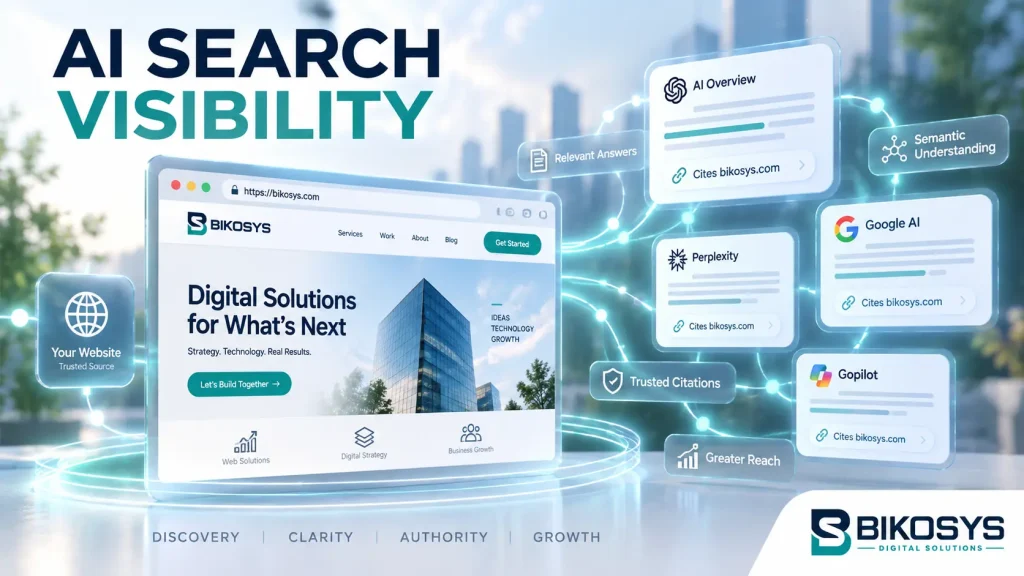
Search is no longer limited to a page of blue links.
Potential customers now ask Google AI Overviews, AI Mode, ChatGPT and other answer engines direct questions: Who is the best provider near me? Which company offers the right service? What should I check before hiring? Which solution fits my situation?
Often, the platform summarizes the options before the customer visits a single website. That creates a real opportunity for businesses—but also a blind spot. A company may perform reasonably well for a few traditional keywords and still be almost absent when customers search through AI.
The answer is not to abandon SEO or chase every new acronym. It is to make your website easy to access, understand, trust and reference.
What does AI search optimization actually mean?
AI search optimization is the work of improving how clearly search engines and AI-powered answer platforms understand your business, expertise and relevance.
You may also see it described as Answer Engine Optimization (AEO), Generative Engine Optimization (GEO), AI SEO or AI visibility optimization. The labels are new; much of the foundation is not. Strong technical SEO, original content, clear business information, credible evidence and a useful website experience still matter.
Google’s own guidance confirms that established SEO practices remain relevant to its generative AI search features. A page still needs to be crawlable, indexed and eligible for Google Search before it can be considered for experiences such as AI Overviews and AI Mode. Google Search Central explains the relationship between SEO and generative search.
There is no secret switch that makes a website visible to AI. Visibility begins with a technically healthy website that is genuinely useful to people.
Why are some businesses missing from AI-generated answers?
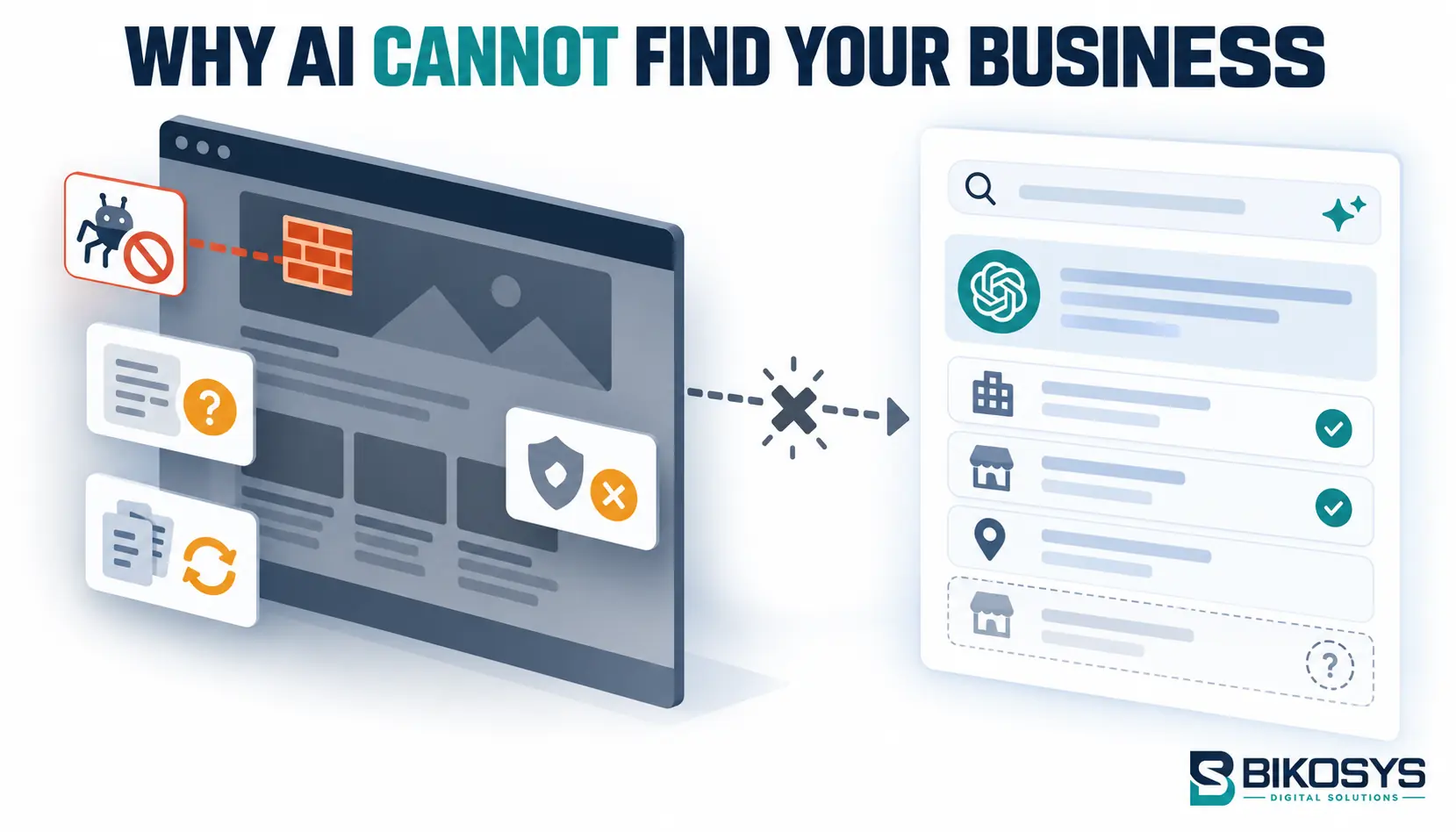
AI systems try to give a useful, well-supported response. If your website leaves important questions unanswered, they have less reason to use it as a source.
1. Your website does not clearly explain what you do
Many homepages still rely on sentences such as “We deliver innovative solutions that help businesses succeed.” It sounds polished, but it could describe thousands of companies.
Your website should identify the services you provide, the customers you serve, the locations you cover, the problems you solve and what makes your approach different. Clear language helps visitors decide whether they are in the right place. It also gives search systems stronger context about when your business is relevant.
2. Your content targets keywords but not real questions
A page written mainly to repeat a keyword rarely gives a customer enough information to make a decision.
For example, a useful website redesign page should do more than state that redesign services are available. It should explain when a redesign is necessary, what the process involves, what problems can be corrected, how long the work may take and how the investment supports business goals.
That depth creates useful source material for the detailed questions people now ask in both conventional and AI-powered search.
3. Your expertise is claimed but not demonstrated
Writing “we are experienced” is not the same as showing experience.
Trust becomes stronger when a website includes detailed case studies, original project images, clearly explained processes, named authors or reviewers, genuine testimonials and measurable outcomes that can be supported.
Search platforms do not know your company personally. They must interpret the evidence available on your website and elsewhere on the web.
4. Important business information is inconsistent
A business name, service area, address or company description may appear differently across the website, Google Business Profile, social profiles and directories. Those inconsistencies create ambiguity.
Maintain one accurate version of your business name, contact details, website address, geographic coverage and core service descriptions. Consistency makes it easier for customers and digital platforms to connect different references to the same organization.
5. Search crawlers cannot properly access the website
Good content cannot perform if it is difficult to crawl or index.
Common barriers include accidental noindex directives, incorrect robots.txt rules, broken internal links, outdated XML sitemaps, redirect chains, duplicate pages, incorrect canonical tags, slow hosting and security tools that block legitimate crawlers.
This is why technical SEO is part of AI visibility—not a separate task.
6. Your service pages are too thin
A service page containing a heading, two short paragraphs and a contact button rarely answers enough questions for a considered purchase.
Each important service page should explain the problem, who the service is for, what is included, how the process works, expected outcomes, relevant examples, common questions and the next step.
This does not mean every page needs to be extremely long. It means the page should contain enough original information to satisfy the visitor’s intent.
7. Your website lacks a clear structure
Search systems use headings, navigation, internal links and structured data to understand how information relates.
Structured data is not a special shortcut into AI results. Google states that no special AI schema is required. Valid schema can still clarify page details and support eligibility for conventional rich results, but it must accurately represent information visible on the page.
How to improve your visibility in AI search
Start with a technical and accessibility audit
Before publishing more content, confirm that the current website works correctly. Review crawlability, indexation, mobile responsiveness, Core Web Vitals, page speed, heading structure, broken links, duplicate content, sitemap configuration, schema validity, accessibility and security.
A technically dependable website gives every future SEO and content investment a stronger foundation.
Build authority around your actual services
One broad article is unlikely to establish meaningful expertise. Build a connected collection of resources around each core service.
A website redesign company might explain refreshes, redesigns and rebuilds; warning signs of an outdated site; cost factors; migration risks; accessibility; preserving rankings during launch; and measuring results after launch. We previously explained the decision process in our guide to choosing between a website refresh, redesign and rebuild.
Each article should answer a distinct question and connect naturally to the appropriate service.
Publish information that cannot be found everywhere
Generic summaries do little to distinguish one business from another. First-hand observations, original screenshots, lessons from real projects, industry-specific recommendations, decision frameworks and honestly reported outcomes are far more useful.
Google recommends unique, helpful and non-commodity content for conventional and generative search. Your practical experience is one of the few content assets a competitor cannot reproduce exactly.
Make the organization behind the content identifiable
Include a detailed About page, clear company information, author or reviewer profiles where appropriate, consistent branding, genuine contact options, privacy and legal pages, relevant professional profiles and evidence of completed work.
This supports search clarity, but more importantly, it reassures potential customers that they are dealing with a real and accountable organization.
Write for people making a decision
AI optimization should not make your website sound robotic. Use direct explanations, descriptive headings, specific examples, honest limitations, useful FAQs and clear next steps.
Avoid forcing an exact keyword into every paragraph. If a page is focused and genuinely useful, the important language will usually appear naturally.
AI visibility is not the same as business growth
Being mentioned in an AI answer may be valuable, but a mention alone does not create revenue.
When a visitor reaches your website, they still need to understand why your business is relevant, why it is trustworthy, how your solution fits and what they should do next. If those answers are missing, additional visibility may produce more impressions without more enquiries.
That is why AI search optimization must work alongside website design, accessibility, performance and conversion strategy. Our earlier article on why websites fail to generate leads explores this wider conversion problem.
Do you need a separate GEO strategy?
Possibly—but it should not be disconnected from your wider website and SEO strategy.
Be cautious of services promising guaranteed citations, instant AI rankings or a special file that supposedly unlocks AI visibility. Google says it does not require llms.txt, special AI markup or artificially fragmented content for its generative search experiences.
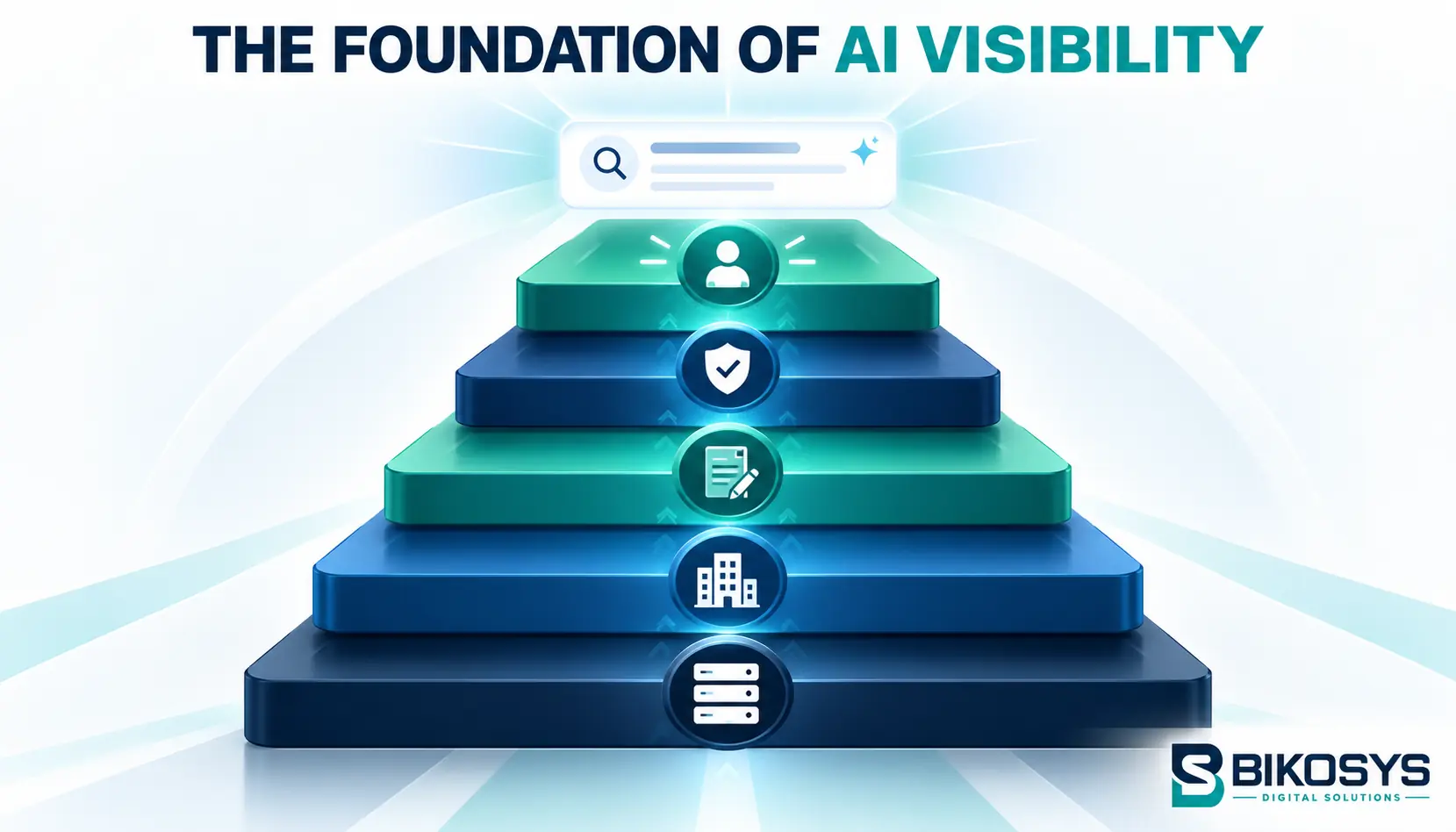
A responsible strategy should prioritize:
- Technical accessibility and indexation
- Clear business and service information
- Helpful, original content
- Demonstrable experience and expertise
- Consistent trust signals
- A strong on-site user and conversion experience
These improvements support conventional search, AI-powered discovery and the people who eventually evaluate your business.
Prepare before competitors become the familiar answer
AI search is changing how customers discover, compare and shortlist providers. Businesses that make their expertise accessible, understandable and verifiable will be better positioned than those relying on vague service pages, outdated websites or disconnected marketing tactics.
You do not need to chase every trend. You need a technically sound website, clear positioning, trustworthy evidence and content that helps a customer make an informed decision.
That is the foundation of sustainable visibility—whether the journey begins with Google, an AI-generated answer or a traditional referral.
Is your website ready for AI-powered search?
Bikosys Digital Solutions helps businesses strengthen the technical, structural and user-experience foundations that support visibility across traditional and AI-powered search.
Our work can include technical SEO audits, website restructuring, schema implementation, accessibility improvements, performance optimization, content architecture and conversion-focused redesign.
If you are unsure whether search engines and AI platforms can properly understand your business, we can identify the barriers, prioritize the opportunities and build a practical improvement roadmap.
Discuss your website and AI visibility goals with Bikosys Digital Solutions.